Tuesday, January 25, 2011
The Magic Never Ends...
We've been on quite a journey this interim and I just want to extend my thanks to the Ribeiro's for there leadership, guidance, and encouragement. Your desire for true learning was plainly evident, both in your words and your lives and it was a blessing and privilege to have been a part of this class. The way that you engage God's world is an inspiration to me and creates in me a passion to do the same. I pray that God will go ahead of you and prepare everything in advance for you in the Netherlands and that there you will find his rich blessings and goodness. I pray that you will be a blessing there as you have been a blessing here. "May the peace of God which transcends all understanding guard you hearts and minds in Christ Jesus." Phil 4:7.

The Human Story
Nate Brees
IDIS 150-07
Profs. Ribeiro & Ribeiro
1/25/11
The Human Story
Examined through the writings of C.S. Lewis and Cornelius Plantinga Jr.
“Creation is neither a necessity nor an accident…Creation is an act of imaginative love” (Plantinga, 23). The human story begins with “an act of imaginative love.” God decided that he desired to the universe because he is a creator God, and at the pinnacle of his creation was mankind. Alone of all creation humanity was declared “very good”. So begins the greatest story of all, a story of horrific crime and cosmic conflict, of romance and a jilted lover, with the greatest plot twist imaginable. It is a story which both never ends and of which the end is already known. A hero beyond our comprehension will return to restore that perfect world that was created and the story will begin again as it was intended to be all along. But all of that was indeed only, as Lewis says, “the cover and the title page: now at last they were beginning Chapter One of The Great Story… which goes on forever: in which every chapter is better than the last” (The Last Battle, 184).
Not only did humanity begin in perfection, it also began in the image of God. “So God created man in his own image, in the image of God he created him; male and female he created them” (Gen 1:27, NIV). To be made in the image of God is to be made with a purpose and thus humanity bears that purpose. Lewis refers to that purpose as the “weight of glory”. “To please God…to be a real ingredient in the divine happiness…to be loved by God, not merely pitied, but delighted in as an artist delights in his work or a father in a son—it seems impossible, a weight or burden of glory which our thoughts can hardly sustain” (Weight of Glory, 6). As we see from this definition, our purpose is more dependent upon God than it is upon ourselves. It is true that we have a small part to play but it is like the moon reflecting the sun. We create no light of our own; we are only to reflect the light that shines on us. In his book, Waking the Dead, John Eldredge writes, "We were created to reflect God's glory, born to bear his image, and he ransomed us to reflect that glory again...your heart bears a glory". What a glorious beginning (pun fully intended).
Along with our glorious nature as image bearers, we also reflect God through our desire for unity. Human beings have a deep desire within them that they cannot fulfill with anything of this world. It is a deep desire for the source of our glory, a desire to get in. Lewis writes, “We do not want merely to see beauty, though, God knows, even that is bounty enough. We want something else which can hardly be put into words—to be united with the beauty we see, to pass into it, to receive it into ourselves, to bathe in it, to become part of it” (Weight of Glory,8). Plantinga deals with longing as well quoting Augustine saying, “O Lord, you have made us for yourself, and our heart is restless until it rests in you” (Plantinga,6). This desire is so deeply rooted that even after sin enters the world this desire is still there, leaving us unsatisfied with sinful desires. We may bury it deeply but it always leaves us unsatisfied with the world. Lewis calls it “the inconsolable secret in each one of you—the secret which hurts so much that you take your revenge on it by calling it names like Nostalgia and Romanticism and Adolescence” (Weight of Glory, 3). This longing plays a key role in the human story and features prominently in the chapters of the fall and redemption.
So far, it may seem that humanity is the subject and even the protagonist of this greatest story ever told. That is not at all the truth. Mankind is in no way the protagonist, and is generally much more an object, in fact the object. Mankind is at the center of a cosmic struggle between God, who is both author and protagonist and Satan, the antagonist. Humanity is indeed the subject however, in regards to the fall. It is a sad truth that when humanity becomes the subject, divinity seems to lose ground. For it is in the fall that humanity can claim full responsibility they were tempted yes, but the James tells us that “each one is tempted when, by his own evil desire, he is dragged away and enticed” (James 1:14,NIV). It seems that human beings have developed a habit of choosing precisely what will do them the most harm. Plantinga notes, “human beings…have so often chosen to live against God, against each other, and against God’s world. We live even against ourselves” (Plantinga, 50). The fall has fully corrupted humanity; we are now totally depraved.
In its depravity, the earth fell to the enemy. Satan took over and became “the prince of this world” (John 16:11, NIV). Lewis writes in Mere Christianity of this world as enemy territory, and Christ as the invader. In an almost unbelievable move, God sends the best he has to try to reclaim the earth, he sends his son, but not as the omnipotent king that he is, but as a human being. For 33 years, Jesus was a part of this world that he had created and for the final three years, he launched a crusade against the devil. Satan was pushed back and suffered losses on every front. The sick were healed, his demons were driven out, the hypocrites were exposed, and hundreds and thousands began to follow Christ. It was short lived though and it seemed disaster struck. Humanity once again made a choice and this time they chose to kill their greatest hope. The Son of God hung on a cross, condemned by sinful men. The devil rejoiced, and Heaven wept as darkness covered the earth.
Yet the battle was not over and the story has hardly begun. In the greatest turnaround in history, Jesus rose triumphant on the third day, bringing redemption to the world. Keith Green in his song “The Victor” appropriately describes the most spectacular espionage ever perpetrated.
His plan of battle fooled them all
They led Him off to prison to die
But as He entered Hades Hall
He broke those hellish chains with a cry
Just listen to those demons screaming
See Him bruise the serpent's head
The prisoners of Hell
He's redeeming (Oh!)
All the power of death is dead.
Redemption arrived and God was restoring the original paradise he had planned. Hope was restored. Mankind now had a way to escape from the kingdom of darkness. This is where desire returned to play a role, where longing could lead the sinners to repentance. Plantinga writes, “Jesus entered the world to offer the penance we refuse” (81). Jesus took our place and paid for our sins, bridging the gap between God and us and giving us a chance to fulfill the longing that we feel so intensely. Plantinga writes about this regeneration and portrays it as becoming who we truly are, who we were made to be. "In the terms Jesus used to describe the prodigal son, regeneration is the mysterious turn of the heart towards home "when he came to himself"(Plantinga, 90). Lewis confirms this by writing of a return to our original glory, “When human souls have become as perfect in voluntary obedience as the inanimate creation is in its lifeless obedience, then they will put on its glory, or rather that greater glory of which Nature is only the first sketch” (Weight of Glory, 8).
What is left for us then is to join the redemptive invasion. Humanity now can choose between Heaven and Hell and there is a cosmic battle over every soul. For those who have chosen Heaven, our job is then to fulfill our purpose: To reflect that glory which God is shining upon us and if possible by that glory to bring out the glory in others. Lewis explains our task by saying, “The load, or weight or burden of my neighbour’s glory should be laid daily on my back” (Weight of Glory, 9). We are to work to redeem all of creation, “Indeed it is God’s plan to gather all things in Christ” (Plantinga, 122). God gives each of us a task in this invasion, a vocation, in which we are to seek to redeem both the people and materials we work with. The people are given special importance because they are eternal. Lewis points out that we are all either “immortal horrors or everlasting splendours” and that we “have never met a mere mortal.” Everyone is progressing towards either Heaven or Hell and as redeemed Christians; we are called to add to the numbers destined for splendor.
Thus, the part of the story that we know draws to close. We have been whispered the ending, or rather the lack of ending, and look forward to it with great excitement, if we side with the invader, or else great trepidation, if we have chosen the side of the prince of darkness. The oft quoted line of the hymn by Doyle Lawson, “Life has many choice, Eternity has two” rings true. The human part of the redemption effort is small but it is necessary. As Lewis writes in The Great Divorce, “There are only two kinds of people in the end: those who say to God, ‘Thy will be done,’ and those to whom God says, in the end, ‘Thy will be done.’ All that are in Hell, choose it” (69).
Bibliography:
Eldredge, John. Waking the Dead. Nashville: Nelson Books, 2003. Print.
"Eternity has Two." Help is on the Way. Crossroads, 2008. CD
Green, Keith. "The Victor." Keith Green: The Ministry Years 1977-197. n.d. CD.
Lewis, Clive S. Mere Christianity. New York: The Macmillan Company, 1952. Print.
Lewis, Clive S. The Great Divorce. New York: The Macmillan Company, 1946. Print.
Lewis, Clive S. The Last Battle. New York: The Macmillan Company, 1956. Print.
Lewis, Clive S. "The Weight of Glory." Church of St Mary the Virgin. Oxford. 8 June 1942. Lecture.
Plantinga, Cornelius. Engaging God's World: A Reformed Vision of Faith, Learning, and Living. Grand Rapids: Wm. B. Eerdmans Publishing Co., 2002. N. pag. Print.
Sunday, January 23, 2011
Pain! Evil or a Gift with which to Fight Evil?
In chapter six of The Problem of Pain, C.S. Lewis presents his view of pain stating that, "Pain is unmasked, unmistakable evil." It is important to mention that here Lewis is defining pain as, "Any experience, whether
physical or mental, which the patient dislikes." In contrast to Lewis philosophy on pain is the position of Dr. Paul Brand, a medical missionary to leprosy patients in India. Dr. Brand entitled on of his books, The Gift of Pain, in which he uses examples from his work with lepers to argue that pain is in fact, although unpleasant and often horrible, a gift, which prevents evil from continuing to grow unchecked.
I agree with Dr. Brand on this and feel that Lewis has missed and important distinction. Lewis justification for his statement that pain is evil is that "Every man knows that something is wrong when he is being hurt." While I agree with that statement it does not follow that because a man knows that something is wrong when in pain, that it is the pain itself that is wrong. To make such an assumption is equivalent to saying that the sign that tells a man who is lost that he is in quite the wrong location is incorrect. For once I feel that Lewis surprisingly, did not logically examine his premises and conclusions to ensure that the conclusion did in fact follow from those premises.
Pain is merely that road sign that points to something being wrong. It tells us that all is not right with the world but it in itself is not what is wrong, it is merely the messenger. Another point that I'd like to make is that it may not always be a messenger of evil. The fact that something is not entirely right might not necessarily mean that it is evil. I say might because I'm only now thinking this through and someone may well have strong evidence to the contrary. However, as an example, it would seem that quite an amount of the physical pain we feel in everyday life is not necessarily attributable to evil. Would you say that stubbing you toe is evil? Or that breaking a finger playing basketball is evil? Or indeed that any of these pains that come from natural causes such as those are evil? If one of you says yes, that it is evil or a result of evil then I would love to hear your reasoning . My reasoning for believing they are not evil is that it seems to me that pain did not enter the world with the fall but rather with creation. I find it hard to believe that it was impossible for Adam and Eve to get hurt in the Garden of Eden, that they never cut their feet on rocks, pricked their fingers on thorns, or stubbed their toes on tree roots. There is also the verse Genesis 3:16, which says "Unto the woman he said, 'I will greatly increase your pains in childbearing." To say increase seems to imply that there is all ready a certain amount of pain present. While it is arguable that it could mean increase from zero, typically if something was absent before one does not increase it but rather create it. Again I am not sure of the theological soundness of this position as of yet and would love to hear opposing opinions.
So far I've only dealt with why it isn't evil, now I turn to how it can be a gift. Dr. Brand talks about how with the disease of leprosy, the disease itself does not cause the skin problems, or missing fingers, or open sores. Rather it is the lack of pain that leads to a patient not being able to tell when the have a rash or not feeling the heat of a stove or not knowing that they have an open cut on their elbow. Their lack of pain makes it possible for these problems to persist, so much so that a leper placing their hand inadvertently in boiling water would not instantly remove it but might leave it there until they see or hear the water boiling and connect it to the location of their hand. They can completely destroy themselves without realizing it because they cannot feel any pain. Pain is how we recognize that something is wrong. Without pain that issue continues and can grow and fester and destroy our lives. This goes for not only for physical issues but emotional and spiritual as well. Pain is the gift that reveals what's wrong so that we can address the problem or in some cases avoid any serious problem all together.
Pain may not be pleasant, but that is necessary so that we cannot ignore it and must recognize the damage we are doing to ourselves. The devil doesn't care so much about causing us pain now and in fact might actually help you avoid it, as long as he can eventually lead you to a place where pain will be all you know. Pain is a gift from God that helps us live in a fallen world.
physical or mental, which the patient dislikes." In contrast to Lewis philosophy on pain is the position of Dr. Paul Brand, a medical missionary to leprosy patients in India. Dr. Brand entitled on of his books, The Gift of Pain, in which he uses examples from his work with lepers to argue that pain is in fact, although unpleasant and often horrible, a gift, which prevents evil from continuing to grow unchecked.
I agree with Dr. Brand on this and feel that Lewis has missed and important distinction. Lewis justification for his statement that pain is evil is that "Every man knows that something is wrong when he is being hurt." While I agree with that statement it does not follow that because a man knows that something is wrong when in pain, that it is the pain itself that is wrong. To make such an assumption is equivalent to saying that the sign that tells a man who is lost that he is in quite the wrong location is incorrect. For once I feel that Lewis surprisingly, did not logically examine his premises and conclusions to ensure that the conclusion did in fact follow from those premises.
Pain is merely that road sign that points to something being wrong. It tells us that all is not right with the world but it in itself is not what is wrong, it is merely the messenger. Another point that I'd like to make is that it may not always be a messenger of evil. The fact that something is not entirely right might not necessarily mean that it is evil. I say might because I'm only now thinking this through and someone may well have strong evidence to the contrary. However, as an example, it would seem that quite an amount of the physical pain we feel in everyday life is not necessarily attributable to evil. Would you say that stubbing you toe is evil? Or that breaking a finger playing basketball is evil? Or indeed that any of these pains that come from natural causes such as those are evil? If one of you says yes, that it is evil or a result of evil then I would love to hear your reasoning . My reasoning for believing they are not evil is that it seems to me that pain did not enter the world with the fall but rather with creation. I find it hard to believe that it was impossible for Adam and Eve to get hurt in the Garden of Eden, that they never cut their feet on rocks, pricked their fingers on thorns, or stubbed their toes on tree roots. There is also the verse Genesis 3:16, which says "Unto the woman he said, 'I will greatly increase your pains in childbearing." To say increase seems to imply that there is all ready a certain amount of pain present. While it is arguable that it could mean increase from zero, typically if something was absent before one does not increase it but rather create it. Again I am not sure of the theological soundness of this position as of yet and would love to hear opposing opinions.
So far I've only dealt with why it isn't evil, now I turn to how it can be a gift. Dr. Brand talks about how with the disease of leprosy, the disease itself does not cause the skin problems, or missing fingers, or open sores. Rather it is the lack of pain that leads to a patient not being able to tell when the have a rash or not feeling the heat of a stove or not knowing that they have an open cut on their elbow. Their lack of pain makes it possible for these problems to persist, so much so that a leper placing their hand inadvertently in boiling water would not instantly remove it but might leave it there until they see or hear the water boiling and connect it to the location of their hand. They can completely destroy themselves without realizing it because they cannot feel any pain. Pain is how we recognize that something is wrong. Without pain that issue continues and can grow and fester and destroy our lives. This goes for not only for physical issues but emotional and spiritual as well. Pain is the gift that reveals what's wrong so that we can address the problem or in some cases avoid any serious problem all together.
Pain may not be pleasant, but that is necessary so that we cannot ignore it and must recognize the damage we are doing to ourselves. The devil doesn't care so much about causing us pain now and in fact might actually help you avoid it, as long as he can eventually lead you to a place where pain will be all you know. Pain is a gift from God that helps us live in a fallen world.
Thursday, January 20, 2011
Vocation: Some Disappointments
I apologize ahead of time that this post is somewhat of a rant, so proceed at your own discretion. I do feel there was good material but I could not help but focus on the parts I disagreed with.
I finished reading Plantinga's chapter on vocation with a somewhat bitter taste in my mouth. The rest of the book had been mostly enjoyable and often illuminating. This chapter however, disappointed me and left me wanting a more direct and complete approach to vocation. There were two main areas reasons that I was not satisfied with Plantinga after this chapter.
The first of those two reasons was that I felt Plantinga was a little to shameless and brazen about throwing in a plug for Calvin. I feel that Calvin is a great school and I am very excited to be a part of it however I felt that Plantinga's presentation of the school was both out of place and incomplete. Firstly, I'll deal with incomplete. Plantinga brings up how the Calvin's curriculum has been designed "to help you love the Lord our God with all you mind, and then to love your neighbor as yourself with a life of educated service" He also talks about how Calvin strives to wrestle with big issues such as evolution and Nietzschean thought. Plantinga however, talks only of design and the design is not reality. That is not to say that the design is not helpful and that Calvin operates entirely other than the design, but to speak only of the design does not reveal the struggles and the flaws in the implementation of that plan. And as I said earlier this was not the place to bring up that design in the first place. The chapter was designed to talk about vocation not about Calvin College. While the vocation of most of the people who will ever read this book to be at Calvin College that does not mean that Calvin College becomes then the topic of discussion, vocation itself should still be central. It should already be clear to the students reading the book that vocation is an important topic to wrestle with and one that Calvin stresses, as that is made apparent by the fact that they have been assigned to read the chapter in the first place.
My second issue with this chapter was it's treatment of secular universities, which I saw as somewhat hypocritical in light of what Plantinga said earlier in the chapter. I will explain that in a moment. Plantinga's description of secular universities is quite daunting and negative. The picture he paints is bleak and he implies that the majority of Christian students attending such universities will get sucked into academic atheism even while retaining a personal faith. I can understand the fear and I agree with Plantinga that secular universities can be daunting places and difficult ones for Christians to shine their light in. However, Plantinga's argument that secular universities are lions dens which only a few Daniels should brave while Christian universities are the primary place where students can learn their vocation, is to me contradictory to his own earlier ideas of vocation. Are not Christian called to ever field? Called to every occupation? Why then should only such a small number be called to secular universities? Plantinga talks about how Christians should enter every occupation and seek to reform it. The occupation of college student at a secular university is certainly one that needs reforming, so why does the book seem to discount that as a viable vocation for most? Secular universities need Christians and if a Christian answers the vocation to go to one God will provide a way for them to think just as deeply about their future vocation (though perhaps without using the term vocation which is very much a Calvin term) as any student attending Calvin would.
I finished reading Plantinga's chapter on vocation with a somewhat bitter taste in my mouth. The rest of the book had been mostly enjoyable and often illuminating. This chapter however, disappointed me and left me wanting a more direct and complete approach to vocation. There were two main areas reasons that I was not satisfied with Plantinga after this chapter.
The first of those two reasons was that I felt Plantinga was a little to shameless and brazen about throwing in a plug for Calvin. I feel that Calvin is a great school and I am very excited to be a part of it however I felt that Plantinga's presentation of the school was both out of place and incomplete. Firstly, I'll deal with incomplete. Plantinga brings up how the Calvin's curriculum has been designed "to help you love the Lord our God with all you mind, and then to love your neighbor as yourself with a life of educated service" He also talks about how Calvin strives to wrestle with big issues such as evolution and Nietzschean thought. Plantinga however, talks only of design and the design is not reality. That is not to say that the design is not helpful and that Calvin operates entirely other than the design, but to speak only of the design does not reveal the struggles and the flaws in the implementation of that plan. And as I said earlier this was not the place to bring up that design in the first place. The chapter was designed to talk about vocation not about Calvin College. While the vocation of most of the people who will ever read this book to be at Calvin College that does not mean that Calvin College becomes then the topic of discussion, vocation itself should still be central. It should already be clear to the students reading the book that vocation is an important topic to wrestle with and one that Calvin stresses, as that is made apparent by the fact that they have been assigned to read the chapter in the first place.
My second issue with this chapter was it's treatment of secular universities, which I saw as somewhat hypocritical in light of what Plantinga said earlier in the chapter. I will explain that in a moment. Plantinga's description of secular universities is quite daunting and negative. The picture he paints is bleak and he implies that the majority of Christian students attending such universities will get sucked into academic atheism even while retaining a personal faith. I can understand the fear and I agree with Plantinga that secular universities can be daunting places and difficult ones for Christians to shine their light in. However, Plantinga's argument that secular universities are lions dens which only a few Daniels should brave while Christian universities are the primary place where students can learn their vocation, is to me contradictory to his own earlier ideas of vocation. Are not Christian called to ever field? Called to every occupation? Why then should only such a small number be called to secular universities? Plantinga talks about how Christians should enter every occupation and seek to reform it. The occupation of college student at a secular university is certainly one that needs reforming, so why does the book seem to discount that as a viable vocation for most? Secular universities need Christians and if a Christian answers the vocation to go to one God will provide a way for them to think just as deeply about their future vocation (though perhaps without using the term vocation which is very much a Calvin term) as any student attending Calvin would.
Man or Rabbit?
"Can't you lead a good life without believing in Christianity?" People asked Lewis to write on this topic and Lewis gave them much more than they bargained for with his answer I am sure. That is because Lewis in his answer does not simply answer the question phrased by their lips but the one formed in their hearts. He cuts past their outward projection into their true motives. Many people today ask that same question and we like Lewis should seek to move beyond that simple question to the much more meaningful one that is at it's root.
Lewis hits the mark when he says, "If he hadn't heard of Christianity he would not be asking this question (that of whether you can lead a good life without being Christian). If, having heard of it, and having seriously considered it, he had decided it was untrue, then once more he would not be asking th question. The man who asks this question has heard of Christianity and is by no means certain that it may not be true. He is really asking 'Need I bother about it?'" The crux of the matter hinges on whether Christianity is important, whether in obeying or disobeying Christianity one might avoid damnation. The question in its simplest and lowest terms is need I do anything at all that would require a form of work, intellectual challenge, or alteration of my lifestyle?
I think that once a person asking that initial question understood what it was in fact that they were asking, they would be able to give themselves the answer quite easily. I don't think that they are unaware that they must change and engage the ideas in world but rather that they desire not too. That desire has led to them throwing up ramshackle defenses of and empty arguments to distract them from the true issue at hand.
Any human encountering the idea of Christianity must then for the sake of discovering truth engage it. As Lewis writes "Here is a door, behind which, according to some people the secret of the universe is waiting for you. Either that's true or it isn't. and if it isn't then what the door really conceals is simply the greatest fraud, the most colossal sell on record. Isn't the job of every man to try to find out which and then devote his full energies either to serving this tremendous secret or to exposing and destroying this gigantic humbug?" To be a man is question and search for truth. Anyone who encounters such a claim whether Christianity or other and does not proceed to search for the truth is more rabbit than man.
Lewis hits the mark when he says, "If he hadn't heard of Christianity he would not be asking this question (that of whether you can lead a good life without being Christian). If, having heard of it, and having seriously considered it, he had decided it was untrue, then once more he would not be asking th question. The man who asks this question has heard of Christianity and is by no means certain that it may not be true. He is really asking 'Need I bother about it?'" The crux of the matter hinges on whether Christianity is important, whether in obeying or disobeying Christianity one might avoid damnation. The question in its simplest and lowest terms is need I do anything at all that would require a form of work, intellectual challenge, or alteration of my lifestyle?
I think that once a person asking that initial question understood what it was in fact that they were asking, they would be able to give themselves the answer quite easily. I don't think that they are unaware that they must change and engage the ideas in world but rather that they desire not too. That desire has led to them throwing up ramshackle defenses of and empty arguments to distract them from the true issue at hand.
Any human encountering the idea of Christianity must then for the sake of discovering truth engage it. As Lewis writes "Here is a door, behind which, according to some people the secret of the universe is waiting for you. Either that's true or it isn't. and if it isn't then what the door really conceals is simply the greatest fraud, the most colossal sell on record. Isn't the job of every man to try to find out which and then devote his full energies either to serving this tremendous secret or to exposing and destroying this gigantic humbug?" To be a man is question and search for truth. Anyone who encounters such a claim whether Christianity or other and does not proceed to search for the truth is more rabbit than man.
Wednesday, January 19, 2011
To Make a Good Man do Bad Things
We all know what an inner ring is, we've all experienced the phenomena of them, whether or not we call them by that name. Cliques, cells, gangs, groups, committees, whatever you want to call them, chances are that we have all both been a part of some inner rings and excluded from others. These inner rings exist in every society, anywhere in the world in any class and culture (which coincidentally can themselves be inner rings). As Lewis says, "It is certainly unavoidable." To go even further Lewis says, "It is necessary: and perhaps it is not a necessary evil." If it is not evil then why does forming clicks have such a negative connotation, even when the exclusion is unintentional. Lewis goes onto explain that "A thing may be morally neutral and yet the desire for that thing may be dangerous." These groups, these inner rings are one such thing.
Thus we see that it is the desire for the inner ring that is sinful. It is that need to be accepted that we feel that is wrong, not the acceptance itself. Lewis gives examples of how this desire for the inner ring can lead to many acts that are both harmful and sinful. He points out that "when promiscuity is the fashion, the chaste are outsiders." And wonders "whether, in ages of promiscuity many a virginity has no been lost less in obedience to Venus than in obedience to the lure of the caucus." Furthermore he points out that "the number of people who first smoked or first got drunk for a similar reason is probably very large." Indeed it appears that this desire for the inner ring can pierce all other aspects of life and make things that would previously have had absolutely no appeal at all seem all of a sudden absolutely necessary to obtain. Lewis puts it well when he says, "Of all the passions, the passion for the Inner Ring is most skillful in making a man who is not yet a very bad man do very bad things."
I would like to recount a time where this last quote was illustrated in my own life. The story requires a little background so please bear with me. I went to a small missionary boarding school in Pakistan for most of my life. It was to begin with K-12 and later 4-12 but at the time that I was in 5th grade the school split, for reasons I won't go into here, with the high school and jr. high moving to Thailand while the elementary remained in Pakistan. After two years separate they rejoined when I was in seventh grade. When the school rejoined there were then two groups of people especially in my age group. There were those who had gone to Thailand, and those who had remained in Pakistan. These groups were especially pronounced in the class above me, where about half had moved to Thailand and the other half stayed in Pakistan. Now that you have that background I can proceed with the story.
When I was in sixth grade I became good friends with a guy who was a year younger than me. For anonymity I'll call him Enrique (this doesn't imply he's Hispanic, I just decided I didn't want to use any of the typical generic pseudonyms). We became really close friends, almost like brothers at that point. The next year when the school came back together his family was on furlough and I moved up into to seventh grade and began to make friends with some of the guys who came back from Thailand. They were mostly a year older than I was but I had known many of them before the school split. Looking back I can see very clearly that they were an Inner Ring that I was trying to gain access to, but at the time I didn't think much of it.
The next year came around and my friend Enrique returned from furlough and started jr. high. At that point in hind sight I would say I was on the borderline of the Inner Ring of the group from Thailand. At first I was extremely happy and excited that Enrique was back and thought we would resume our friendship where it left off. However, it soon became apparent that my friends from Thailand of the Inner Ring I desired to be a part of were not so predisposed to accepting Enrique as a friend. In fact they treated him rather horribly (I am not saying this to imply that those people were bad people, they to were suffering from the desire to maintain the Inner Ring I believe, and many of them are still among my best friends and have become extremely Godly men) teasing him and excluding him in the mean ways that only jr. high kids can. It is one of my greatest shames that I just watched them and did nothing about it. To this day I regret not having valued my friendship with him much more highly than the virtue of being inside the Inner Ring and wonder at how different things could have been between us had I done the right thing and taken his side.
As it was I spent several months avoiding him before he confronted me and asked what had happened. I talked to told him, I am ashamed to say, that I now had more friends than before and that I could not spend time with him as before. He took it amazingly well, and it is a testimony to his resilience that he formed other friendships that quickly became quite deep and meaningful. The two of us grew apart for a year before my other friends grew up a little and realized that Enrique was in fact a great guy, and only then did I approach him and apologize. I was cowardly but sincere and he was kind enough to accept my apology. We have now become close friends but not in the way that we were that first year. I forfeited that privilege through my foolish desires for acceptance.
Just last summer I had the chance to see Enrique again and we talked about it and he assured me that he had entirely forgiven me. I responded by telling him that I knew but that I still regretted it and the loss of all that might have been. The desire for the Inner Ring, even though brief and fleeting can have such lasting consequences. Even though it seems, more so than any desire, to offer relationships and friendships that are meaningful, it lies and in fact destroys those which mean the most. To make a good man do bad things offer him a chance to enter the Inner Ring he desires to enter.
Thus we see that it is the desire for the inner ring that is sinful. It is that need to be accepted that we feel that is wrong, not the acceptance itself. Lewis gives examples of how this desire for the inner ring can lead to many acts that are both harmful and sinful. He points out that "when promiscuity is the fashion, the chaste are outsiders." And wonders "whether, in ages of promiscuity many a virginity has no been lost less in obedience to Venus than in obedience to the lure of the caucus." Furthermore he points out that "the number of people who first smoked or first got drunk for a similar reason is probably very large." Indeed it appears that this desire for the inner ring can pierce all other aspects of life and make things that would previously have had absolutely no appeal at all seem all of a sudden absolutely necessary to obtain. Lewis puts it well when he says, "Of all the passions, the passion for the Inner Ring is most skillful in making a man who is not yet a very bad man do very bad things."
I would like to recount a time where this last quote was illustrated in my own life. The story requires a little background so please bear with me. I went to a small missionary boarding school in Pakistan for most of my life. It was to begin with K-12 and later 4-12 but at the time that I was in 5th grade the school split, for reasons I won't go into here, with the high school and jr. high moving to Thailand while the elementary remained in Pakistan. After two years separate they rejoined when I was in seventh grade. When the school rejoined there were then two groups of people especially in my age group. There were those who had gone to Thailand, and those who had remained in Pakistan. These groups were especially pronounced in the class above me, where about half had moved to Thailand and the other half stayed in Pakistan. Now that you have that background I can proceed with the story.
When I was in sixth grade I became good friends with a guy who was a year younger than me. For anonymity I'll call him Enrique (this doesn't imply he's Hispanic, I just decided I didn't want to use any of the typical generic pseudonyms). We became really close friends, almost like brothers at that point. The next year when the school came back together his family was on furlough and I moved up into to seventh grade and began to make friends with some of the guys who came back from Thailand. They were mostly a year older than I was but I had known many of them before the school split. Looking back I can see very clearly that they were an Inner Ring that I was trying to gain access to, but at the time I didn't think much of it.
The next year came around and my friend Enrique returned from furlough and started jr. high. At that point in hind sight I would say I was on the borderline of the Inner Ring of the group from Thailand. At first I was extremely happy and excited that Enrique was back and thought we would resume our friendship where it left off. However, it soon became apparent that my friends from Thailand of the Inner Ring I desired to be a part of were not so predisposed to accepting Enrique as a friend. In fact they treated him rather horribly (I am not saying this to imply that those people were bad people, they to were suffering from the desire to maintain the Inner Ring I believe, and many of them are still among my best friends and have become extremely Godly men) teasing him and excluding him in the mean ways that only jr. high kids can. It is one of my greatest shames that I just watched them and did nothing about it. To this day I regret not having valued my friendship with him much more highly than the virtue of being inside the Inner Ring and wonder at how different things could have been between us had I done the right thing and taken his side.
As it was I spent several months avoiding him before he confronted me and asked what had happened. I talked to told him, I am ashamed to say, that I now had more friends than before and that I could not spend time with him as before. He took it amazingly well, and it is a testimony to his resilience that he formed other friendships that quickly became quite deep and meaningful. The two of us grew apart for a year before my other friends grew up a little and realized that Enrique was in fact a great guy, and only then did I approach him and apologize. I was cowardly but sincere and he was kind enough to accept my apology. We have now become close friends but not in the way that we were that first year. I forfeited that privilege through my foolish desires for acceptance.
Just last summer I had the chance to see Enrique again and we talked about it and he assured me that he had entirely forgiven me. I responded by telling him that I knew but that I still regretted it and the loss of all that might have been. The desire for the Inner Ring, even though brief and fleeting can have such lasting consequences. Even though it seems, more so than any desire, to offer relationships and friendships that are meaningful, it lies and in fact destroys those which mean the most. To make a good man do bad things offer him a chance to enter the Inner Ring he desires to enter.
Tuesday, January 18, 2011
Eros: Diving In
First of all let me say that I am by no stretch of the imagination an expert on the matter of Eros, or as C.S. Lewis defines it "that state which we call 'being in love'." I have very little if any experience with it at all and many of my ideas on it are still in the formative stage being shaped by experiences that broaden my understanding. What I do have is a desire for Eros, a desire that is part of every human being. That desire that begins before we have even tasted it is one of those things that makes it seem so divine, as it is similar to our deepest longing for God, we long for him well before we have any experience of intimacy with him.
One of the things that I appreciated about Lewis examination of Eros was his statement that "We must not be totally serious about Venus." By Venus he is referring to sexuality, especially as a part of Eros. I think this can be extended to Eros in its entirety. While both sex and love are both glorious things that should not be treated frivolously that does not mean that they must be treated with utter solemnity. There needs to be a merriment and laughter mixed in. Perhaps we can learn a little bit from the young boy with a crush who teases that girl without end. Now we cannot take it to the same extreme as the young boy who will not admit his feelings and who may in fact hurt the girl badly, but both love and shared sexuality must be able to endure some teasing. In any romantic relationship, I feel that the couple needs to be able to laugh at each other as well as with each other, especially when it comes to Venus. As Lewis says "Banish play and laughter from the bed of love and you may let in a false goddess." That is you let in the idea that it should always satisfy and that it can offer more than it in reality can.
That seriousness can go so far as to create an idol of Eros itself, and Lewis talks of that. In a sense it becomes an idol because we take Eros at his word when he says that he is infinite and unchanging. Lewis says "To be in love is both to intend and promise fidelity." At the same time however Lewis points out that "all the time the grim joke is that this Eros whose voice seems to speak from the eternal realm is not himself necessarily even permanent. He is notoriously the most mortal of our loves." Eros is in fact fleeting and therefore we must not take it too seriously but instead we must use it as motivation to develop our ability to actively love. Lewis in his radio broadcast on Eros spoke of it as diving into a pool. Diving gets you into the pool but once in it you can't continue to dive you have to start to swim.
One of the things that I appreciated about Lewis examination of Eros was his statement that "We must not be totally serious about Venus." By Venus he is referring to sexuality, especially as a part of Eros. I think this can be extended to Eros in its entirety. While both sex and love are both glorious things that should not be treated frivolously that does not mean that they must be treated with utter solemnity. There needs to be a merriment and laughter mixed in. Perhaps we can learn a little bit from the young boy with a crush who teases that girl without end. Now we cannot take it to the same extreme as the young boy who will not admit his feelings and who may in fact hurt the girl badly, but both love and shared sexuality must be able to endure some teasing. In any romantic relationship, I feel that the couple needs to be able to laugh at each other as well as with each other, especially when it comes to Venus. As Lewis says "Banish play and laughter from the bed of love and you may let in a false goddess." That is you let in the idea that it should always satisfy and that it can offer more than it in reality can.
That seriousness can go so far as to create an idol of Eros itself, and Lewis talks of that. In a sense it becomes an idol because we take Eros at his word when he says that he is infinite and unchanging. Lewis says "To be in love is both to intend and promise fidelity." At the same time however Lewis points out that "all the time the grim joke is that this Eros whose voice seems to speak from the eternal realm is not himself necessarily even permanent. He is notoriously the most mortal of our loves." Eros is in fact fleeting and therefore we must not take it too seriously but instead we must use it as motivation to develop our ability to actively love. Lewis in his radio broadcast on Eros spoke of it as diving into a pool. Diving gets you into the pool but once in it you can't continue to dive you have to start to swim.
Monday, January 17, 2011
Fiddling on the Brink of Hell
Our discussion of Learning in War-Time today, began with Professor Ribeiro asking several questions. He essentially asked, what are you doing at Calvin? Why are you here? How can you justify sitting here and learning when people all around the world are living in absolute poverty, experiencing horrific disasters, and desperately need our help? Why are you learning instead of helping them?
In my ninth grade Bible class we were posed much the same question. My teacher asked us why we were just staying at our school for the most part and why we didn't get up and go out into public a fulfill the great commission by preaching. After all we were commanded to make disciples of all nations, so why are we just sitting in relative comfort? He asked us to come up with reasons why we didn't just get up and go down to the capital Islamabad and preach in the Red Mosque. The Red Mosque was the site of an almost month long stand-off between the Pakistani government and radical terrorists, and over a hundred people were killed. I have to say that our class was somewhat stunned and I felt that none of answers truly answered the question of why we learning. We talked about how getting ourselves killed for nothing was probably not in God's plan and how preaching was not going to be very effective in this case, and how we had to reach people from within the culture rather than as white foreigners barging in. All of these I feel were logical reasons but none of them answered the deeper question about why weren't directly doing something to help them, instead of spending over half our days learning things like math and English.
I struggled over the issue for a very long time, and still do from time to time. I was asking myself the question that Lewis phrases as such. "How [is it] right, or even psychologically possible, for creatures who are every moment advancing either to heaven or to hell, to spend any fraction of the little time allowed them in the world on such comparative trivialities as literature or art, mathematics or biology." Lewis began this train of thought because people were wondering how one could study while the country was engaged in war, and Lewis replies that as a Christian the question is rather irrelevant because the earth is always engaged in a cosmic struggle. Thus Lewis points to Nero and says that, "to a Christian the true tragedy of Nero must not be that he fiddles while the city was on fire but that he fiddles on the brink of hell." When we decide to take four of our years devoting the majority of our time to simply studying, when we already are well enough equipped to go out and make a difference in the world, are we fiddling on the brink of hell?
Some people argue that by learning we can become better equipped to deal with the problems we will have to face. If we didn't take the time to learn we would not be able to adequately address the a number of the problems that we encounter. I'm not convinced by this argument though, because while it does equip us better, and I do believe that that is an important and valuable thing, there are so many problems that can be solved by the uneducated as long as they are willing to be unselfish and to work. Problems such as basic sanitation, caring for orphaned children, and numerous other issues that present themselves in the third world do not require an advanced learning in order to help address them. No, I feel that the number of problems an uneducated person could solve in the four years that it takes to get a college degree would outnumber the number of extra problems, ones that required a further education, that could be solved by a person with a college degree. Perhaps you disagree with me but for now that is my stance.
However, I am still spending at least four years at Calvin College and possibly more in getting further education, so obviously either I do not feel that education is a waste of time and that it is worth while, or I am entirely selfish and don't care about others people's problems. While I do admit to being selfish far to often, I do care deeply about the problems of the world and thus I must believe the first option.
There are several reasons that I believe learning is still worth the time and Lewis talks about them in his essay. Lewis gives a deep insight into man when he says, "The war will fail to absorb our whole attention because it is a finite object, and therefore intrinsically unfitted to support the whole attention of a human soul." There is finite thing that can hold mankind's entire attention and I am therefore pointed to the idea that mankind is to be preoccupied with infinite things. Infinite things are the only things then that are worth living for. Later Lewis talks about drowning and says, "The rescue of drowning men is, then a duty worth dying for, but not worth living for." Even a the saving of physical lives of people is not worth living for.
One might then say well what about their spiritual lives, those are eternal and therefore ought to be worth living for. My answer to that would be yes that is worth living for, but I think that that's only a part of what is worth living for. I think that what is worth living for is glorifying God as much as possible by having as many souls as possible praise him as deeply and fully as possible. The saving of souls only works towards the first part of that purpose while the training of your own and other peoples souls works towards the second. Souls also are the thing which we will encounter everywhere we go, for at the very least our own soul will always be present where we are.
That is why I believe learning is an admirable pursuit. It is the training of our soul, which must not be neglected in favor of always helping others. We are called to help others but we are also called to look after our own souls and "live lives worthy of our calling" (I Thes 2:12). This is why I believe as Lewis does that one action is no more spiritual than the next, it is all entirely dependent on "the same condition, that of being offered to God, of being done humbly 'as to the Lord'" That is where vocation comes in. The acts that are specifically designed for us by God that become our "spiritual acts of worship" (Rom 12:1). Therefore some are called to spend there time learning, and I believe I am called to spend my time, at least for the present, at Calvin College in the vocation of a student, and more importantly of a learner.
In my ninth grade Bible class we were posed much the same question. My teacher asked us why we were just staying at our school for the most part and why we didn't get up and go out into public a fulfill the great commission by preaching. After all we were commanded to make disciples of all nations, so why are we just sitting in relative comfort? He asked us to come up with reasons why we didn't just get up and go down to the capital Islamabad and preach in the Red Mosque. The Red Mosque was the site of an almost month long stand-off between the Pakistani government and radical terrorists, and over a hundred people were killed. I have to say that our class was somewhat stunned and I felt that none of answers truly answered the question of why we learning. We talked about how getting ourselves killed for nothing was probably not in God's plan and how preaching was not going to be very effective in this case, and how we had to reach people from within the culture rather than as white foreigners barging in. All of these I feel were logical reasons but none of them answered the deeper question about why weren't directly doing something to help them, instead of spending over half our days learning things like math and English.
I struggled over the issue for a very long time, and still do from time to time. I was asking myself the question that Lewis phrases as such. "How [is it] right, or even psychologically possible, for creatures who are every moment advancing either to heaven or to hell, to spend any fraction of the little time allowed them in the world on such comparative trivialities as literature or art, mathematics or biology." Lewis began this train of thought because people were wondering how one could study while the country was engaged in war, and Lewis replies that as a Christian the question is rather irrelevant because the earth is always engaged in a cosmic struggle. Thus Lewis points to Nero and says that, "to a Christian the true tragedy of Nero must not be that he fiddles while the city was on fire but that he fiddles on the brink of hell." When we decide to take four of our years devoting the majority of our time to simply studying, when we already are well enough equipped to go out and make a difference in the world, are we fiddling on the brink of hell?
Some people argue that by learning we can become better equipped to deal with the problems we will have to face. If we didn't take the time to learn we would not be able to adequately address the a number of the problems that we encounter. I'm not convinced by this argument though, because while it does equip us better, and I do believe that that is an important and valuable thing, there are so many problems that can be solved by the uneducated as long as they are willing to be unselfish and to work. Problems such as basic sanitation, caring for orphaned children, and numerous other issues that present themselves in the third world do not require an advanced learning in order to help address them. No, I feel that the number of problems an uneducated person could solve in the four years that it takes to get a college degree would outnumber the number of extra problems, ones that required a further education, that could be solved by a person with a college degree. Perhaps you disagree with me but for now that is my stance.
However, I am still spending at least four years at Calvin College and possibly more in getting further education, so obviously either I do not feel that education is a waste of time and that it is worth while, or I am entirely selfish and don't care about others people's problems. While I do admit to being selfish far to often, I do care deeply about the problems of the world and thus I must believe the first option.
There are several reasons that I believe learning is still worth the time and Lewis talks about them in his essay. Lewis gives a deep insight into man when he says, "The war will fail to absorb our whole attention because it is a finite object, and therefore intrinsically unfitted to support the whole attention of a human soul." There is finite thing that can hold mankind's entire attention and I am therefore pointed to the idea that mankind is to be preoccupied with infinite things. Infinite things are the only things then that are worth living for. Later Lewis talks about drowning and says, "The rescue of drowning men is, then a duty worth dying for, but not worth living for." Even a the saving of physical lives of people is not worth living for.
One might then say well what about their spiritual lives, those are eternal and therefore ought to be worth living for. My answer to that would be yes that is worth living for, but I think that that's only a part of what is worth living for. I think that what is worth living for is glorifying God as much as possible by having as many souls as possible praise him as deeply and fully as possible. The saving of souls only works towards the first part of that purpose while the training of your own and other peoples souls works towards the second. Souls also are the thing which we will encounter everywhere we go, for at the very least our own soul will always be present where we are.
That is why I believe learning is an admirable pursuit. It is the training of our soul, which must not be neglected in favor of always helping others. We are called to help others but we are also called to look after our own souls and "live lives worthy of our calling" (I Thes 2:12). This is why I believe as Lewis does that one action is no more spiritual than the next, it is all entirely dependent on "the same condition, that of being offered to God, of being done humbly 'as to the Lord'" That is where vocation comes in. The acts that are specifically designed for us by God that become our "spiritual acts of worship" (Rom 12:1). Therefore some are called to spend there time learning, and I believe I am called to spend my time, at least for the present, at Calvin College in the vocation of a student, and more importantly of a learner.
Redemption: Becoming who we were made to be.
Humanity is totally depraved. That is one of the ideas central to reformed theology. G.K. Chesterton said that original sin is "the only part of Christian theology which can really be proved." It is this very important concept that often leads Christians to mistakenly say that they are "only sinners saved by grace" or "just a wretch who found God's mercy." The words "just" and "only" render those statements entirely false. It is true that we are all sinners who need God's grace, but it is also true that that is not all we are.
John Eldredge in Waking the Dead says, "Your story does not begin with sin. It begins with a glory bestowed upon you by God." Sin was never a part of the plan. It is the greedy imperialist invader of our souls, exploiting it's original habitant, the image of God. We must recognize this and not allow the exploitation to continue. We were created as glorious beings, not only that but as the most glorious beings on earth. It was only humanity that was pronounced "very good." As the Christian music artist David Crowder sings, "You (God) make everything glorious. What does that make me?" Redemption holds the beauty of Christianity. It returns us to creation, saying sin is not what you are made for. Redemption brings us back to the intended purpose.
That is what I feel Plantinga was driving when he spoke of regeneration. Nothing can be regenerated unless it was generated in the first place. Therefore we can say both that, "the old has gone and the new has come" and that the old has gone and the even older has come back. Plantinga points out how this regeneration is a return to the original plan, "In the terms Jesus used to describe the prodigal son, regeneration is the mysterious turn of the heart towards home "when he came to himself." That sinful profligate, womanizing, free spending nature, was not who the son truly was. Regeneration and redemption brought him back to who he truly was. Our truest nature is not our sinful one, but the one that is the image of our creator.
Some people struggle with that saying that in redemption we strive to be more like Christ, therefore how can that be truly our nature and not his that is glorious. Plantinga brings up the example C.S. Lewis uses in Mere Christianity of a child trying on his parents clothes. Plantinga says that Christian are people who dress up like Christ ... because the only way we can become better than we are is by trying on our grown up clothes." By imitating Christ we are not trying to become him, rather trying to become better. Elsewhere in Mere Christianity Lewis remarks on how the more we become like Jesus the more we become our true self. In fact without becoming like Jesus we cannot find our true self, as Lewis says, "Until you have given yourself up to Him, you will not have a real self."
John Eldredge in Waking the Dead says, "Your story does not begin with sin. It begins with a glory bestowed upon you by God." Sin was never a part of the plan. It is the greedy imperialist invader of our souls, exploiting it's original habitant, the image of God. We must recognize this and not allow the exploitation to continue. We were created as glorious beings, not only that but as the most glorious beings on earth. It was only humanity that was pronounced "very good." As the Christian music artist David Crowder sings, "You (God) make everything glorious. What does that make me?" Redemption holds the beauty of Christianity. It returns us to creation, saying sin is not what you are made for. Redemption brings us back to the intended purpose.
That is what I feel Plantinga was driving when he spoke of regeneration. Nothing can be regenerated unless it was generated in the first place. Therefore we can say both that, "the old has gone and the new has come" and that the old has gone and the even older has come back. Plantinga points out how this regeneration is a return to the original plan, "In the terms Jesus used to describe the prodigal son, regeneration is the mysterious turn of the heart towards home "when he came to himself." That sinful profligate, womanizing, free spending nature, was not who the son truly was. Regeneration and redemption brought him back to who he truly was. Our truest nature is not our sinful one, but the one that is the image of our creator.
Some people struggle with that saying that in redemption we strive to be more like Christ, therefore how can that be truly our nature and not his that is glorious. Plantinga brings up the example C.S. Lewis uses in Mere Christianity of a child trying on his parents clothes. Plantinga says that Christian are people who dress up like Christ ... because the only way we can become better than we are is by trying on our grown up clothes." By imitating Christ we are not trying to become him, rather trying to become better. Elsewhere in Mere Christianity Lewis remarks on how the more we become like Jesus the more we become our true self. In fact without becoming like Jesus we cannot find our true self, as Lewis says, "Until you have given yourself up to Him, you will not have a real self."
Sunday, January 16, 2011
The Wonder of Learning
When I was three years old my parents began to home-school me. They had decided to start kindergarten with my sister a year early, she was four at the time, and I flat out refused to let my dad teach her and not me as well. I was so eager to learn, and also a typical younger brother, that I jumped at every chance I was given. I was home-schooled for that year and the next before I even started kindergarten officially. I wanted to know things, and when I did know them I wanted to share them with people, such was my fascination with learning, and perhaps also a little bit in the sound of my own voice, but I truly believe that learning was the main motivation. I found learning wonderful and further I approached it with a sense of wonder, pondering what it might reveal to me next.
As I went through school passing through elementary into jr. high and then high school, that sense of wonder and that attitude that learning was wonderful became harder to maintain. As responsibilities increased, the homework load got bigger, stress began to grow as well and that started to choke out some of the wonder of learning. To often school became a habit, and homework a chore. It became, frequently, simply a means to something else rather than something valued in its own right. Fredrick Douglas in his autobiography wrote about how hard he fought to educate himself, and how he had to barter with the white boys in his neighborhood in order to learn how to read. When learning becomes something that we have almost unlimited access to, we tend to lose sight of what a wonderful resource it is.
In his chapter "The Wonder of Learning", Paul Marshall says, "Real learning occurs when we face something new." It happens when we encounter something that we don't understand and are unsure of how to deal with. As a child I recognized how little I knew and so many experiences were new to me, that there were multitudes of things to learn in order to understand and react to those experiences. Once I grew older, I began to feel that I had a good grasp of things and that prevented me from seeing how new and mysterious some of the issues I was facing were. I lost the wonder in part, because I became arrogant, and to an extent I think everyone does. I thought I knew a good deal and I also thought I knew what it was that I needed to learn. That was one of the biggest mistakes. We don't know what we need to learn. What we need to learn is entirely dependent on those new situations that are presented to us. When we presume to know what it is that we don't know that we need to know, we lose the wonder of learning and replace instead with a hunt where we will return with only rabbits when we were looking for deer.
As I went through school passing through elementary into jr. high and then high school, that sense of wonder and that attitude that learning was wonderful became harder to maintain. As responsibilities increased, the homework load got bigger, stress began to grow as well and that started to choke out some of the wonder of learning. To often school became a habit, and homework a chore. It became, frequently, simply a means to something else rather than something valued in its own right. Fredrick Douglas in his autobiography wrote about how hard he fought to educate himself, and how he had to barter with the white boys in his neighborhood in order to learn how to read. When learning becomes something that we have almost unlimited access to, we tend to lose sight of what a wonderful resource it is.
In his chapter "The Wonder of Learning", Paul Marshall says, "Real learning occurs when we face something new." It happens when we encounter something that we don't understand and are unsure of how to deal with. As a child I recognized how little I knew and so many experiences were new to me, that there were multitudes of things to learn in order to understand and react to those experiences. Once I grew older, I began to feel that I had a good grasp of things and that prevented me from seeing how new and mysterious some of the issues I was facing were. I lost the wonder in part, because I became arrogant, and to an extent I think everyone does. I thought I knew a good deal and I also thought I knew what it was that I needed to learn. That was one of the biggest mistakes. We don't know what we need to learn. What we need to learn is entirely dependent on those new situations that are presented to us. When we presume to know what it is that we don't know that we need to know, we lose the wonder of learning and replace instead with a hunt where we will return with only rabbits when we were looking for deer.
Friday, January 14, 2011
Relative Morality
In all honesty, I have kind of felt that we have gone overboard on the topic subjective vs. objective morality. I feel like to an extent we have been beating a dead horse, but at the same time this feeling is probably aggravated by having read Abolition of Man only last month. Therefore, when we read The Poison of Subjectivism I was really unsure of what new I was going to pull out of it. I'm happy to say that I have indeed found some thoughts that I felt were not too overdone and or too redundant to share. One of the defences that Lewis notes is often turned to, by the proponents of moral subjectivism, is that of the differences in morality from culture to culture. Lewis's response is that the majority of cultural moralities are in fact much more similar than they are different. "If a man will go into a library and spend a few days with the Encyclopedia of Religion and Ethics he will soon discover the massive unanimity of the practical reason of man." Lewis says does not deny there are differences saying, "There are, of course differences. There are even blindnesses in particular cultures..." His idea is rather that they all have an underpinning of ideas that point towards the same objective good. With this in mind I have decided to seek to test this logic using the culture farthest from this perceived objective moral good as I can think of. I do this realizing that in order to overthrow this standard the culture cannot simply be missing certain values or differ over how far to take the same concept. Instead they must consider entire concepts which most civilizations hold as right to be wrong and the opposite as well.
The culture that I propose to use in this test is the Sawi people of Irian Jaya, Indonesia. They are the people made famous in Don Richardson's book, The Peace Child. The most honored and highly held value in this society was that of treachery. The more elaborate the treachery the greater honor the traitor received. The closer the traitor was to those betrayed, again the greater the achievement. Richardson spoke of his bewilderment when he first told the gospel message to them, as they thought that Judas was the hero and Jesus the idiot. It was a cannibalistic society, with human not only eaten but desired as a delicacy, especially when the meat was from one who was betrayed. The ideals of the society seem to totally contradict the traditional morality.
However, even while this was the tribes ideal, there still remained certain customs that were observed and culture guidelines that were followed. Age was still honored as wise. Family was typically still treasured, in spite of the fact that it was considered acceptable to betray one family, they simply believed that most were not strong enough to do that. Above all however, there was the custom of the peace child, which reversed all there other practices. Deep down there was still this idea that treachery could be wrong and that peace was desirable. The idea was basically that in order to make peace the two warring tribes or groups would have one family from each side give up a child to a family from the other side. These children then became sacred, the peace children. Anyone who harmed a peace child, committed the gravest sin possible.
Even in this savage, primitive, seemingly alien culture, eventually we find the moral law. The moral law manages to pervade even the deepest jungles to the most isolated peoples. It would seem to me that Lewis statement has passed the test. There is indeed no such thing as moral subjectivity.
The culture that I propose to use in this test is the Sawi people of Irian Jaya, Indonesia. They are the people made famous in Don Richardson's book, The Peace Child. The most honored and highly held value in this society was that of treachery. The more elaborate the treachery the greater honor the traitor received. The closer the traitor was to those betrayed, again the greater the achievement. Richardson spoke of his bewilderment when he first told the gospel message to them, as they thought that Judas was the hero and Jesus the idiot. It was a cannibalistic society, with human not only eaten but desired as a delicacy, especially when the meat was from one who was betrayed. The ideals of the society seem to totally contradict the traditional morality.
However, even while this was the tribes ideal, there still remained certain customs that were observed and culture guidelines that were followed. Age was still honored as wise. Family was typically still treasured, in spite of the fact that it was considered acceptable to betray one family, they simply believed that most were not strong enough to do that. Above all however, there was the custom of the peace child, which reversed all there other practices. Deep down there was still this idea that treachery could be wrong and that peace was desirable. The idea was basically that in order to make peace the two warring tribes or groups would have one family from each side give up a child to a family from the other side. These children then became sacred, the peace children. Anyone who harmed a peace child, committed the gravest sin possible.
Even in this savage, primitive, seemingly alien culture, eventually we find the moral law. The moral law manages to pervade even the deepest jungles to the most isolated peoples. It would seem to me that Lewis statement has passed the test. There is indeed no such thing as moral subjectivity.
Satan goes to Church
The quote that stuck out to me the most in Plantinga's chapter on "the fall" was "Satan goes to church more than anybody else because he knows that at a particular time and place, a corrupt church can devastate the cause of the gospel." After getting over the initial, "wow that's really true, what a cool way to say it" phase, my next thought was, "That would make a great children's book." Now you know that my mind works in very peculiar ways and are probably wondering why on earth any child would want to read a book about Satan and why any parent would ever let them read one entitled "Satan goes to Church." Having said that what follows is the first, and probably only draft, of the children's story, "Satan goes to Church", which unless I am greatly surprised will remain unpublished. In spite of that fact I am already lining up sequels, such as "Satan goes to a Potluck", "Satan goes to Bible Study" and "Satan goes to Sunday School".
I would ask the reader to keep in mind that as a first draft, it will be devoid of illustrations, and so I request that you use your imagination to picture Satan, your stereotypical image of him, (bright red, complete with horns and a tale) dressed up in his Sunday best, perhaps a black coat with tales, a clean white pressed shirt, slacks and a top hat. Then imagine this figure strolling into a fabulous Gothic church, with stained glass windows, and elegantly carved figures on the pillars. Imagine him sitting in austere wooden pews with fellow church goers. Picture him leaning over conspiratorially to whisper pervasive insidious things into his neighbors ear. In all of this however make sure you are picturing him as something you might see in a children's book, nothing very frightening, and in fact typically smiling quite amiably. I hope that you have the picture in your head, and so finally I present you with:
Satan goes to Church
It was a beautiful Sunday morning and Satan woke up and put on his best clothes. Today like every Sunday, Satan was going to church. Now Satan didn't go to church because he loved God, or because he wanted to learn more about him, or because he felt sorry for what he'd done and wanted to confess his sins. In fact Satan didn't go to church for any of the good reasons that people go to church. No, Satan actually hated church and he went because he wanted to stop people from finding the truth there. He went out of spite and hate. Satan grabbed his top hat as he went out the door and drove down to church, thinking all along the way about how he could stop people from finding the truth today.
Satan had been going to this church for several months already, so he had been able to make some friends. One of those friends was the usher, Mr. Chosen. As Satan walked in Mr. Chosen saw him and called out to him, "Hey Luc (pronounced like Luke), over here!" Everybody at church called Satan, Luc. After all, what church would let him in if they knew he was Satan? "How have you been Luc?" Asked Mr. Chosen in a very friendly manner. "It's great to see you today. Glad you could make it to worship with God's elect."
Satan nodded in reply and said, "Yes indeed, glad to be one of the special few." At that moment a homeless man, Mr. Dirty came up to the church door.
"Can I come in?" asked Mr. Dirty.
Satan looked at him and said, "Well you don't look very Christian...What do you think Mr. Chosen."
Mr. Chosen said, "You're right Luc." Turning to Mr. Dirty, he said, "I'm sorry but this is a service for Christian's ones who are clean. And look at you, your obviously dirty and sinful. There's no place for you here."
Mr. Dirty went away sad, and Satan smirked slightly and then said to Mr. Chosen, "Well said, Mr. Chosen, after all, we are the chosen people, we can't just let anybody in." Satan gave himself a pat on the back for managing to hide the truth from both Mr. Dirty and Mr. Chosen. He'd barely even had to do anything, Mr. Chosen was doing the work for him now.
Satan left Mr. Chosen to go find his seat and as he settled into his pew he saw Pastor Proud pass by. "Pastor proud," said Satan, "I'd like to talk to you."
"Of course, Luc," said Pastor Proud, "As long as you make it quick."
"Well," said Satan, "I really like it when you use big words in your sermons, it makes you seem so smart and people will respect what you have to say more."
"Really?" asked Pastor Proud. "It doesn't make it hard for the people to understand?"
"Of course not!" lied Satan, "The people love it when you use big words, it makes them feel more important, like they're more intelligent. After all nobody wants to be part of a dumb religion."
"Thank you Luc, that makes a lot of sense. I think I'll take your advice."
"My pleasure," smiled Satan evilly as soon as the pastor had turned his back.
The service began, and after a few songs and a prayer Pastor Proud got up and began to preach. His sermon was so long and used such big words and talked about such complicated topics that no one in the congregation understood a bit of it. None of them were willing to admit it though because none of them wanted to look dumb. At last Pastor Proud finished, and after a closing hymn, everybody left making sure to congratulate the pastor on his wonderful sermon, so that he wouldn't suspect that they didn't understand it. Finally Satan, got to the door and he shook Pastor Proud's hand and said, "I'll see you next week pastor. You keep preaching like that and people are going to simply love your sermons." Satan got in his car and drove home, celebrating all the way there that he had hidden the truth from everybody at church that morning.
The End
I would ask the reader to keep in mind that as a first draft, it will be devoid of illustrations, and so I request that you use your imagination to picture Satan, your stereotypical image of him, (bright red, complete with horns and a tale) dressed up in his Sunday best, perhaps a black coat with tales, a clean white pressed shirt, slacks and a top hat. Then imagine this figure strolling into a fabulous Gothic church, with stained glass windows, and elegantly carved figures on the pillars. Imagine him sitting in austere wooden pews with fellow church goers. Picture him leaning over conspiratorially to whisper pervasive insidious things into his neighbors ear. In all of this however make sure you are picturing him as something you might see in a children's book, nothing very frightening, and in fact typically smiling quite amiably. I hope that you have the picture in your head, and so finally I present you with:
Satan goes to Church
It was a beautiful Sunday morning and Satan woke up and put on his best clothes. Today like every Sunday, Satan was going to church. Now Satan didn't go to church because he loved God, or because he wanted to learn more about him, or because he felt sorry for what he'd done and wanted to confess his sins. In fact Satan didn't go to church for any of the good reasons that people go to church. No, Satan actually hated church and he went because he wanted to stop people from finding the truth there. He went out of spite and hate. Satan grabbed his top hat as he went out the door and drove down to church, thinking all along the way about how he could stop people from finding the truth today.
Satan had been going to this church for several months already, so he had been able to make some friends. One of those friends was the usher, Mr. Chosen. As Satan walked in Mr. Chosen saw him and called out to him, "Hey Luc (pronounced like Luke), over here!" Everybody at church called Satan, Luc. After all, what church would let him in if they knew he was Satan? "How have you been Luc?" Asked Mr. Chosen in a very friendly manner. "It's great to see you today. Glad you could make it to worship with God's elect."
Satan nodded in reply and said, "Yes indeed, glad to be one of the special few." At that moment a homeless man, Mr. Dirty came up to the church door.
"Can I come in?" asked Mr. Dirty.
Satan looked at him and said, "Well you don't look very Christian...What do you think Mr. Chosen."
Mr. Chosen said, "You're right Luc." Turning to Mr. Dirty, he said, "I'm sorry but this is a service for Christian's ones who are clean. And look at you, your obviously dirty and sinful. There's no place for you here."
Mr. Dirty went away sad, and Satan smirked slightly and then said to Mr. Chosen, "Well said, Mr. Chosen, after all, we are the chosen people, we can't just let anybody in." Satan gave himself a pat on the back for managing to hide the truth from both Mr. Dirty and Mr. Chosen. He'd barely even had to do anything, Mr. Chosen was doing the work for him now.
Satan left Mr. Chosen to go find his seat and as he settled into his pew he saw Pastor Proud pass by. "Pastor proud," said Satan, "I'd like to talk to you."
"Of course, Luc," said Pastor Proud, "As long as you make it quick."
"Well," said Satan, "I really like it when you use big words in your sermons, it makes you seem so smart and people will respect what you have to say more."
"Really?" asked Pastor Proud. "It doesn't make it hard for the people to understand?"
"Of course not!" lied Satan, "The people love it when you use big words, it makes them feel more important, like they're more intelligent. After all nobody wants to be part of a dumb religion."
"Thank you Luc, that makes a lot of sense. I think I'll take your advice."
"My pleasure," smiled Satan evilly as soon as the pastor had turned his back.
The service began, and after a few songs and a prayer Pastor Proud got up and began to preach. His sermon was so long and used such big words and talked about such complicated topics that no one in the congregation understood a bit of it. None of them were willing to admit it though because none of them wanted to look dumb. At last Pastor Proud finished, and after a closing hymn, everybody left making sure to congratulate the pastor on his wonderful sermon, so that he wouldn't suspect that they didn't understand it. Finally Satan, got to the door and he shook Pastor Proud's hand and said, "I'll see you next week pastor. You keep preaching like that and people are going to simply love your sermons." Satan got in his car and drove home, celebrating all the way there that he had hidden the truth from everybody at church that morning.
The End
Thursday, January 13, 2011
Mere Christianity
In the wake of reading book one of Mere Christianity, and having read The Abolition of Man at the end of last semester I feel as if I have nothing to add or take away from what has already been said about the moral law. And since what has already been said has been phrased much more elegantly and powerfully than I could put it I think I will simply leave Lewis statements on the moral law as they stand and let you simply experience them for yourself. Instead I would like to turn to Lewis' idea of "Mere" Christianity.
When I first heard of the title, Mere Christianity, I wasn't quite sure what was meant by that. The word "mere" brought several possible interpretations too mind which were in fact quite conflicting. At first it seemed to me as if it were saying it was just Christianity, as if it were nothing special, something rather basic to be looked down upon by those of superior knowledge. That of course is ridiculous as Lewis would be the first to proclaim that Christianity is not only important it is the thing by which we "see everything else."
The next concept of "mere" that came to me was that of simple and basic, as if Lewis were laying out a simplified, toned down version of Christianity. A Christianity for dummies if you will. It had this condescending connotation to it, as if this book was for those who couldn't quite keep up with the full blown Christianity. That is not correct either because Lewis, while he does desire to make Christianity understandable to all, he is not selling a dumbed down version that is somewhat inferior to the fully fledged one. No, the beauty of Christianity is that it is itself both delightfully simple, so much so that it is to little children to whom the kingdom of heaven belongs, and wonderfully complex such that we can never solve all of its mysteries.
Lewis says rather, that in saying "mere" Christianity, he is referring to the central essence of Christianity, as he says, "the agreed, or common, or central, or 'mere' Christianity." Lewis is trying to remove the points of contention and get to the heart of what Christianity is. It is the core if you will of Christianity, the essentials which he is interesting himself with, those parts which if absent would render the belief no longer Christianity at all. In doing so Lewis removes those pieces which are contentious among various denomination and very clearly avoids lending support to one or the other regardless of his own membership in the Church of England.
This is part of what Lewis so appealing, even to those outside of the church. By removing all the confusing and non-essential quarrels between denominations over, infant baptism, the role of the Virgin Mary, the transformation of the sacrament, and so on, Lewis is able to present a much more inviting and understandable picture of Christianity without removing from it any of it's marvelous mystery. If only we as the church could see that and be willing to lay down our quarrels over petty insignificant aspects and merely accept the others opinions as long as they did not affect the central nature of Christianity. How much more like Christ could the church then become? After all quarreling and complaining are the two things that prevent the church from being a light as it should.
Phil 2:14-16
Do everything without complaining or arguing, 15 so that you may become blameless and pure, children of God without fault in a crooked and depraved generation, in which you shine like stars in the universe
NIV
When I first heard of the title, Mere Christianity, I wasn't quite sure what was meant by that. The word "mere" brought several possible interpretations too mind which were in fact quite conflicting. At first it seemed to me as if it were saying it was just Christianity, as if it were nothing special, something rather basic to be looked down upon by those of superior knowledge. That of course is ridiculous as Lewis would be the first to proclaim that Christianity is not only important it is the thing by which we "see everything else."
The next concept of "mere" that came to me was that of simple and basic, as if Lewis were laying out a simplified, toned down version of Christianity. A Christianity for dummies if you will. It had this condescending connotation to it, as if this book was for those who couldn't quite keep up with the full blown Christianity. That is not correct either because Lewis, while he does desire to make Christianity understandable to all, he is not selling a dumbed down version that is somewhat inferior to the fully fledged one. No, the beauty of Christianity is that it is itself both delightfully simple, so much so that it is to little children to whom the kingdom of heaven belongs, and wonderfully complex such that we can never solve all of its mysteries.
Lewis says rather, that in saying "mere" Christianity, he is referring to the central essence of Christianity, as he says, "the agreed, or common, or central, or 'mere' Christianity." Lewis is trying to remove the points of contention and get to the heart of what Christianity is. It is the core if you will of Christianity, the essentials which he is interesting himself with, those parts which if absent would render the belief no longer Christianity at all. In doing so Lewis removes those pieces which are contentious among various denomination and very clearly avoids lending support to one or the other regardless of his own membership in the Church of England.
This is part of what Lewis so appealing, even to those outside of the church. By removing all the confusing and non-essential quarrels between denominations over, infant baptism, the role of the Virgin Mary, the transformation of the sacrament, and so on, Lewis is able to present a much more inviting and understandable picture of Christianity without removing from it any of it's marvelous mystery. If only we as the church could see that and be willing to lay down our quarrels over petty insignificant aspects and merely accept the others opinions as long as they did not affect the central nature of Christianity. How much more like Christ could the church then become? After all quarreling and complaining are the two things that prevent the church from being a light as it should.
Phil 2:14-16
Do everything without complaining or arguing, 15 so that you may become blameless and pure, children of God without fault in a crooked and depraved generation, in which you shine like stars in the universe
NIV
Descartes
Reading Lewis over the passed two weeks and especially reading Mere Christianity, I was distinctly reminded of and earlier Christian philosopher, Rene Descartes. Descartes was a French mathematician an philosopher who began the movement known as rationalism, where reason is taken as the final authority above experience. While Lewis and Descartes differ in many regards I could not help but be struck by the similarities in their methods and in their final arrival in the existence of an omnipotent God.
I tend to think that Lewis, as a highly educated member of academia and student of the classics, would have encountered Descartes and built off of some of the latter's ideas. Both employ a very tried and true philosophical method of presenting their argument backed up with facts, then following that by entertaining possible counterarguments and refuting them, and then moving onto the next portion of the argument. This is a method that makes a lot of sense to my mind and it has the advantage of allowing two parties in conflict to determine the point of dispute and, if that dispute cannot be resolved between them, to go no further in arguing points which are dependent upon that one. So often we find disputes where the true point of disagreement lies much earlier than the matters which are actually being discussed. Both Lewis and Descartes avoid this by beginning at the very basic assumption and building up there argument from there entertaining the earliest objections, rather than starting in the middle and simply thrusting their view on you which you disagree with but cannot find the precise point on which you disagree because it simply has not been brought up.
The piece of Descartes that I was most distinctly reminded of was the the Third Meditation: Of God that he Exists. Here Descartes establishes the existence of a god base on reason, using the truths he has already accepted, that of his own existence, and that of his capacity to think. Descartes logic is complicated and difficult to follow, but it flew in the face of many of the later thinkers of the Enlightenment, who felt theism was simply for the ignorant rabble and not for the reasoning and rational academics.
Lewis I feel continues this tradition of Christian apologetics, defending Christianity as a logically and rationally reasoned lifestyle. Thankfully for us Lewis is much easier to follow and understand than Descartes his predecessor. Lewis also abandons the philosophy of total rationalism which Descartes adhered too, and this allows Lewis to much more simply present his case, as he is no longer limited simply to logic but can use examples of the reality which we all experience.
I guess in the end I wanted to present the connections between these two great thinkers. Both laid down ground breaking ideas defending Christianity those who would deride it as a blind and unintelligent faith. It heartens me to see the foundations of a rational defense for our faith laid down by those that have gone before us, so that we can use them in the process of finding and strengthening our own. It also excites me to think of who the next great Christian thinker and apologetic may be.
If you wish to read Descartes Third Meditation you can find it here.
I tend to think that Lewis, as a highly educated member of academia and student of the classics, would have encountered Descartes and built off of some of the latter's ideas. Both employ a very tried and true philosophical method of presenting their argument backed up with facts, then following that by entertaining possible counterarguments and refuting them, and then moving onto the next portion of the argument. This is a method that makes a lot of sense to my mind and it has the advantage of allowing two parties in conflict to determine the point of dispute and, if that dispute cannot be resolved between them, to go no further in arguing points which are dependent upon that one. So often we find disputes where the true point of disagreement lies much earlier than the matters which are actually being discussed. Both Lewis and Descartes avoid this by beginning at the very basic assumption and building up there argument from there entertaining the earliest objections, rather than starting in the middle and simply thrusting their view on you which you disagree with but cannot find the precise point on which you disagree because it simply has not been brought up.
The piece of Descartes that I was most distinctly reminded of was the the Third Meditation: Of God that he Exists. Here Descartes establishes the existence of a god base on reason, using the truths he has already accepted, that of his own existence, and that of his capacity to think. Descartes logic is complicated and difficult to follow, but it flew in the face of many of the later thinkers of the Enlightenment, who felt theism was simply for the ignorant rabble and not for the reasoning and rational academics.
Lewis I feel continues this tradition of Christian apologetics, defending Christianity as a logically and rationally reasoned lifestyle. Thankfully for us Lewis is much easier to follow and understand than Descartes his predecessor. Lewis also abandons the philosophy of total rationalism which Descartes adhered too, and this allows Lewis to much more simply present his case, as he is no longer limited simply to logic but can use examples of the reality which we all experience.
I guess in the end I wanted to present the connections between these two great thinkers. Both laid down ground breaking ideas defending Christianity those who would deride it as a blind and unintelligent faith. It heartens me to see the foundations of a rational defense for our faith laid down by those that have gone before us, so that we can use them in the process of finding and strengthening our own. It also excites me to think of who the next great Christian thinker and apologetic may be.
If you wish to read Descartes Third Meditation you can find it here.
Wednesday, January 12, 2011
The Safest Road to Hell
"In one of his letters to his young nephew, Wormwood, Screwtape posits that, "the safest road to Hell is the gradual one--the gentle slope, soft underfoot, without sudden turnings, without milestones, without signposts." The point Lewis is making is that powerful emotions, though rash and unthinking while being experienced, do not last long and they prompt an examination of the soul. Much more effective to prevent such an examination is an unreasoning apathy, which can stretch on much longer if not indeed for a lifetime. Earlier Screwtape tells his nephew "Murder is no better than cards if cards can do the trick." In reality murder is probably worse than cards because murder would stir up inside all but the most calloused soul thoughts of right and wrong causing them to seek absolution of there guilt. Acknowledgement is the first step of confession and the process of forgiveness and murder is much more obvious and more readily acknowledged as a sin than a game of cards (which may in fact not be sinful and thus when it is is much more difficult to acknowledge).
There is great danger in this for us as Christians, because while it would be very difficult to tempt the majority of humanity to murder, it is oh so easy to tempt us to be apathetic. After all apathy is so much easier, it avoids all the pain and heartache caused by the emotions such as love and anger. I think of it like climbing a mountain with heaven at its summit and hell at it's base. To go up is difficult, it involves climbing and even if that climbing is up a gentle slope there is still more exertion required than to simply turn around and take the slow winding path down. Thus one might very easily be tempted to take the gentle, easy path down the mountain rather than the laborious one up it. At the same time however, it would be extremely difficult to convince a hiker simply to throw themselves off a cliff in order to reach the bottom. While both throwing oneself off the mountain would accomplish the tempters goal more quickly, it is much more realistic to assume that they will take the easy path down.
The point where we might be convinced to turn around on that mountain and begin that easy descent is the point where our desire for the summit has diminished that we no longer consider it worth the tribulations to reach. We must as Christians guard ourselves against ever reaching that point. As Romans 12:11 says, "Never be lacking in zeal but keep your spiritual fervor serving the Lord." And just as the way to reach the summit is to keep it always in mind the way to reach our destination is outlined for us in Hebrews 12 where we are told to "Fix [our] eyes upon Jesus, the author and perfecter of faith." Another analogy used is that of temperature. We must be Christians on fire. In Revelation the Church in Laodicea is rebuked severely because they are "neither hot nor cold." This state of spiritual apathy disgusts God and he says "So, because you are lukewarm--neither hot nor cold--I am about to spit you out of my mouth."
As Christians this is an ever present danger and many more within the church fall to this temptation than to that of sinning outright. The consequences however are the same as Satan wins a soul just as much through apathy as through contempt. In order to guard against the subtle enemy of apathy John Piper suggests that we test ourselves daily with the following questions:
There is great danger in this for us as Christians, because while it would be very difficult to tempt the majority of humanity to murder, it is oh so easy to tempt us to be apathetic. After all apathy is so much easier, it avoids all the pain and heartache caused by the emotions such as love and anger. I think of it like climbing a mountain with heaven at its summit and hell at it's base. To go up is difficult, it involves climbing and even if that climbing is up a gentle slope there is still more exertion required than to simply turn around and take the slow winding path down. Thus one might very easily be tempted to take the gentle, easy path down the mountain rather than the laborious one up it. At the same time however, it would be extremely difficult to convince a hiker simply to throw themselves off a cliff in order to reach the bottom. While both throwing oneself off the mountain would accomplish the tempters goal more quickly, it is much more realistic to assume that they will take the easy path down.
The point where we might be convinced to turn around on that mountain and begin that easy descent is the point where our desire for the summit has diminished that we no longer consider it worth the tribulations to reach. We must as Christians guard ourselves against ever reaching that point. As Romans 12:11 says, "Never be lacking in zeal but keep your spiritual fervor serving the Lord." And just as the way to reach the summit is to keep it always in mind the way to reach our destination is outlined for us in Hebrews 12 where we are told to "Fix [our] eyes upon Jesus, the author and perfecter of faith." Another analogy used is that of temperature. We must be Christians on fire. In Revelation the Church in Laodicea is rebuked severely because they are "neither hot nor cold." This state of spiritual apathy disgusts God and he says "So, because you are lukewarm--neither hot nor cold--I am about to spit you out of my mouth."
As Christians this is an ever present danger and many more within the church fall to this temptation than to that of sinning outright. The consequences however are the same as Satan wins a soul just as much through apathy as through contempt. In order to guard against the subtle enemy of apathy John Piper suggests that we test ourselves daily with the following questions:
"Do you have zeal for a worthy cause? Is there some good for which you are being slandered? Or is life so harmless in this evil world that it fits in nicely with the way things are going, and so nobody is asking you anything?"
Tuesday, January 11, 2011
Bearing the Weight of Glory
I want to begin with a portion that is not the central message of the sermon but that due to both the matter it discusses and the conviction with which it struck me, makes it impossible for me to think of other parts of the sermon without first addressing this. The quote is this: "In some sense, as dark to the intellect as it is unendurable to the feelings, we can be both banished from the presence of Him who is present everywhere and erased from the knowledge of Him who knows all. We can be left utterly and absolutely outside -- repelled, exiled, estranged, finally and unspeakably ignored."
Never before have I been so scared because of something I read. In all the descriptions of hell that I have ever heard, this was most certainly the most horrific to my mind. I still cannot comprehend the terror of being unknown to an omniscient God, and abandoned by an omnipresent deity. To be so completely alone and outcast at the brink of non-existence and yet still existing and aware of the state you are in is torture far beyond any lake of fire.
Thankfully Lewis moves on and says, "On the other hand, we can be called in, welcomed, received, acknowledged." The story does not end in despair but rather in joy and in glory. For me the rest of the sermon gains a whole new level of beauty after having read of the fate that could have become my reality. The weight of glory weighs more heavily on me for the realization of what I truly deserve. Lewis says it so beautifully, "to please God... to be a real ingredient in the divine happiness... to be loved by God, not merely pitied, but delighted in as an artist delights in his work or a father in a son--it seems impossible, a weight or burden of glory which our thoughts can hardly sustain." What a heavy and wonderful weight it is.
Oh what a wonderful and difficult thing it can be to recognize that we are glorious. In his book Waking the Dead, John Eldredge writes "It's so common this mind-set, this idea that we are no-good wretches, ready to sin at a moment's notice, incapable of goodness, and certainly far from any glory." The truth is though that God made us and said that we were very good. As Eldredge says, "We were created to reflect God's glory, born to bear his image, and he ransomed us to reflect that glory again...your heart bears a glory." And what a glory it is that we bear. It is so wonderful that we cannot even grasp it at all, as Lewis points out, without the help of images. These images are each merely reflections of that glory. Lewis talks about glory as a getting inside those images, entering into and moving beyond nature. Lewis says, "We are summoned to pass in through Nature, beyond her, into that splendor which she fitfully reflects."
My favorite description of glory is Lewis' of how that glory would look in someone else. He says to "remember that the dullest and most uninteresting person to talk to may one day be a creature which, if you saw it now, you would be strongly tempted to worship," What a glory it is that would make gods out of simple men. Of course in order to avoid falling into the trap that we ourselves are a god, and letting our glory turn to pride we must focus on the glory of our neighbors, for "Next to the Blessed Sacrament itself, your neighbor is the holiest object presented to your senses." Therefore let us bear the weight of each others glory.
Never before have I been so scared because of something I read. In all the descriptions of hell that I have ever heard, this was most certainly the most horrific to my mind. I still cannot comprehend the terror of being unknown to an omniscient God, and abandoned by an omnipresent deity. To be so completely alone and outcast at the brink of non-existence and yet still existing and aware of the state you are in is torture far beyond any lake of fire.
Thankfully Lewis moves on and says, "On the other hand, we can be called in, welcomed, received, acknowledged." The story does not end in despair but rather in joy and in glory. For me the rest of the sermon gains a whole new level of beauty after having read of the fate that could have become my reality. The weight of glory weighs more heavily on me for the realization of what I truly deserve. Lewis says it so beautifully, "to please God... to be a real ingredient in the divine happiness... to be loved by God, not merely pitied, but delighted in as an artist delights in his work or a father in a son--it seems impossible, a weight or burden of glory which our thoughts can hardly sustain." What a heavy and wonderful weight it is.
Oh what a wonderful and difficult thing it can be to recognize that we are glorious. In his book Waking the Dead, John Eldredge writes "It's so common this mind-set, this idea that we are no-good wretches, ready to sin at a moment's notice, incapable of goodness, and certainly far from any glory." The truth is though that God made us and said that we were very good. As Eldredge says, "We were created to reflect God's glory, born to bear his image, and he ransomed us to reflect that glory again...your heart bears a glory." And what a glory it is that we bear. It is so wonderful that we cannot even grasp it at all, as Lewis points out, without the help of images. These images are each merely reflections of that glory. Lewis talks about glory as a getting inside those images, entering into and moving beyond nature. Lewis says, "We are summoned to pass in through Nature, beyond her, into that splendor which she fitfully reflects."
My favorite description of glory is Lewis' of how that glory would look in someone else. He says to "remember that the dullest and most uninteresting person to talk to may one day be a creature which, if you saw it now, you would be strongly tempted to worship," What a glory it is that would make gods out of simple men. Of course in order to avoid falling into the trap that we ourselves are a god, and letting our glory turn to pride we must focus on the glory of our neighbors, for "Next to the Blessed Sacrament itself, your neighbor is the holiest object presented to your senses." Therefore let us bear the weight of each others glory.
Let there be...
 Everything apart from God, begins with creation. There is no other way for any item to be in existence apart from through creation. The manner of creation may vary from item to item, and the immediate creator may vary as well but creation is a universal experience. Nothing (again apart from God) escapes being created. It is bizarre and troubling to me that a world that owes itself to creation would not place a much higher value upon creativity. After all we were made in the image of God who himself was a creator.
By saying God is a creator it does not simply mean that God created something, instead it is part of who he is. As Plantinga points out in Chapter 2 of Engaging God's World, "Creation is neither a necessity, nor an accident." God very intentionally created the world because it was an outflowing of who he was as Plantinga says, "Creation is an act of imaginative love." All of creation that we can see points to the joy of it's creator in making it. The very vastness and the great and incomprehensible diversity indicate a God who delights in creating more and more. That is the creation we are a part of and in fact which God has put us in charge of.
In the January Series Andy Crouch talked about how to bear God's image is to desire to create. Far to often we look at the world that has been given to us and instead of bearing the image we are marked with well, we abuse the world. Creation should be natural to us, an act that is a fitting outpouring of our humanity just as it was a natural outpouring of God's divinity. We need to try to return to that creative spirit. God has even provided us the resources, the whole world is ours to use, but we are supposed to use it to create and expand the horizons of the possible, rather than misuse and abuse it by seeking our own personal gain and pleasure.
To be a creative bearer of God's image means not only creating new things but creating new bonds and relationships. God is a relational triune God with each part delighting in the other in the mysteriously wonderful dance of perichoresis. In creating us in his image God has invited us to join the dance both with him and with the church, his bride. How churlish it would be to refuse a dance with the maker of the universe, our, perfect-in-every-way, husband.
Another aspect that struck me about both Plantinga's book and Andy Crouch's talk was the concept of dominion of the world, as not an instance of us having power over the world but us being able to empower the world. So often we get the idea that power means to command and that to have dominion over something means to order it around. In reality having dominion over the earth "is never 'lording over'; it's more like 'lording under'". It is stewardship not conquest points out Plantinga. Crouch in his lecture pointed out that even in the creation process there was not a command. God did not directly order things, there was no struggle to impose anything. God simply said "Let there be..." It is such a relaxed and free phrase. It implies a desire for something more rather than a task or duty to make. As the image bearers of a creator God let us also approach our creative impulses not as duty to harness the world and force it's resource into new shapes and forms but rather to seek for the freedom and expansion of creation by saying "let there be..."
Monday, January 10, 2011
Our English Syllabus
I must confess that this is one of the first readings of C.S. Lewis that has disappointed me and I find that somewhat surprising given the topic and also the response of the class in discussion. I hesitate to say that I disagree with Lewis upon some of his points because to disagree would imply that I truly understand his position and believe the contrary. The truth is though that I feel I do not grasp entirely his position and that he does not clarify his argument to the extent that he typically does.
That is not to say that I did not find portions especially enlightening and well thought through. The initial portion where Lewis distinguishes between education and vocational training truly struck me. "...education" says Lewis, "is essentially for freemen and vocational training for slaves." This idea is echoed back through history and continues today when physical slavery has become less commonplace (although still sadly much more present than we like to admit). As we press forward towards an egalitarian society we find that "our danger is that equality may mean training for all and education for none" says Lewis. The American Public Schools system fell into this trap with the "No Child Left Behind" campaign, deciding to avoid unfairly educating some, by removing there education and instead providing a meaner training for all. It is true that we cannot abandon vocational training because those jobs that they fill are necessary parts of society, but that does not mean we abandon education instead of integrating education and training.
My uneasiness with Lewis writing comes at his drastic separation between education and learning. I fully agree with him that there is a distinction between the two. Education is the process of teaching a person to become a better, more complete human being. One might consider it vocational training to be a human. Learning is the seeking after knowledge simply for the sake of knowing. Lewis says that "...knowledge is the natural food of the human mind:" and as such it should be pursued simply because in doing so we are fulfilling a natural hunger. Learning does not involve a teacher to pupil relationship but rather equals in the pursuit of knowledge with each others assistance. Learning is your own personal adventure to find knowledge and specifically to find it in the areas that you desire to seek it. Education is a path that is set before someone in order to give them an overview and broader understanding of things that will hopefully lead to a more complete, and "good" human being. Lewis says that "...learning considered in itself, has on my view, no connexion at all with education." This is where I take issue. To me it seems that while distinct learning and education are closely intertwined. It seems to me that education is the springboard for learning. Returning to the idea of education as a path laid out by the teacher for the pupil to study, won't the pupil upon encountering a branch of the path that they find of particular interest decide to leave the path and explore under there own impulse more of that reason and wouldn't they then be said to be engaging in learning rather than education. However, the time would then come where they return to the path and investigate other sections.
I know this is only a small portion of the piece but it stuck out to me nearly obscuring the rest of the piece which I felt had a very legitimate point and purpose. Perhaps I am misinterpreting the intent of the reading but I feel that education and learning coincide much more and are much more closely interconnected that one gets the impression of from Lewis's reading.
That is not to say that I did not find portions especially enlightening and well thought through. The initial portion where Lewis distinguishes between education and vocational training truly struck me. "...education" says Lewis, "is essentially for freemen and vocational training for slaves." This idea is echoed back through history and continues today when physical slavery has become less commonplace (although still sadly much more present than we like to admit). As we press forward towards an egalitarian society we find that "our danger is that equality may mean training for all and education for none" says Lewis. The American Public Schools system fell into this trap with the "No Child Left Behind" campaign, deciding to avoid unfairly educating some, by removing there education and instead providing a meaner training for all. It is true that we cannot abandon vocational training because those jobs that they fill are necessary parts of society, but that does not mean we abandon education instead of integrating education and training.
My uneasiness with Lewis writing comes at his drastic separation between education and learning. I fully agree with him that there is a distinction between the two. Education is the process of teaching a person to become a better, more complete human being. One might consider it vocational training to be a human. Learning is the seeking after knowledge simply for the sake of knowing. Lewis says that "...knowledge is the natural food of the human mind:" and as such it should be pursued simply because in doing so we are fulfilling a natural hunger. Learning does not involve a teacher to pupil relationship but rather equals in the pursuit of knowledge with each others assistance. Learning is your own personal adventure to find knowledge and specifically to find it in the areas that you desire to seek it. Education is a path that is set before someone in order to give them an overview and broader understanding of things that will hopefully lead to a more complete, and "good" human being. Lewis says that "...learning considered in itself, has on my view, no connexion at all with education." This is where I take issue. To me it seems that while distinct learning and education are closely intertwined. It seems to me that education is the springboard for learning. Returning to the idea of education as a path laid out by the teacher for the pupil to study, won't the pupil upon encountering a branch of the path that they find of particular interest decide to leave the path and explore under there own impulse more of that reason and wouldn't they then be said to be engaging in learning rather than education. However, the time would then come where they return to the path and investigate other sections.
I know this is only a small portion of the piece but it stuck out to me nearly obscuring the rest of the piece which I felt had a very legitimate point and purpose. Perhaps I am misinterpreting the intent of the reading but I feel that education and learning coincide much more and are much more closely interconnected that one gets the impression of from Lewis's reading.
Saturday, January 8, 2011
Longing and Hope
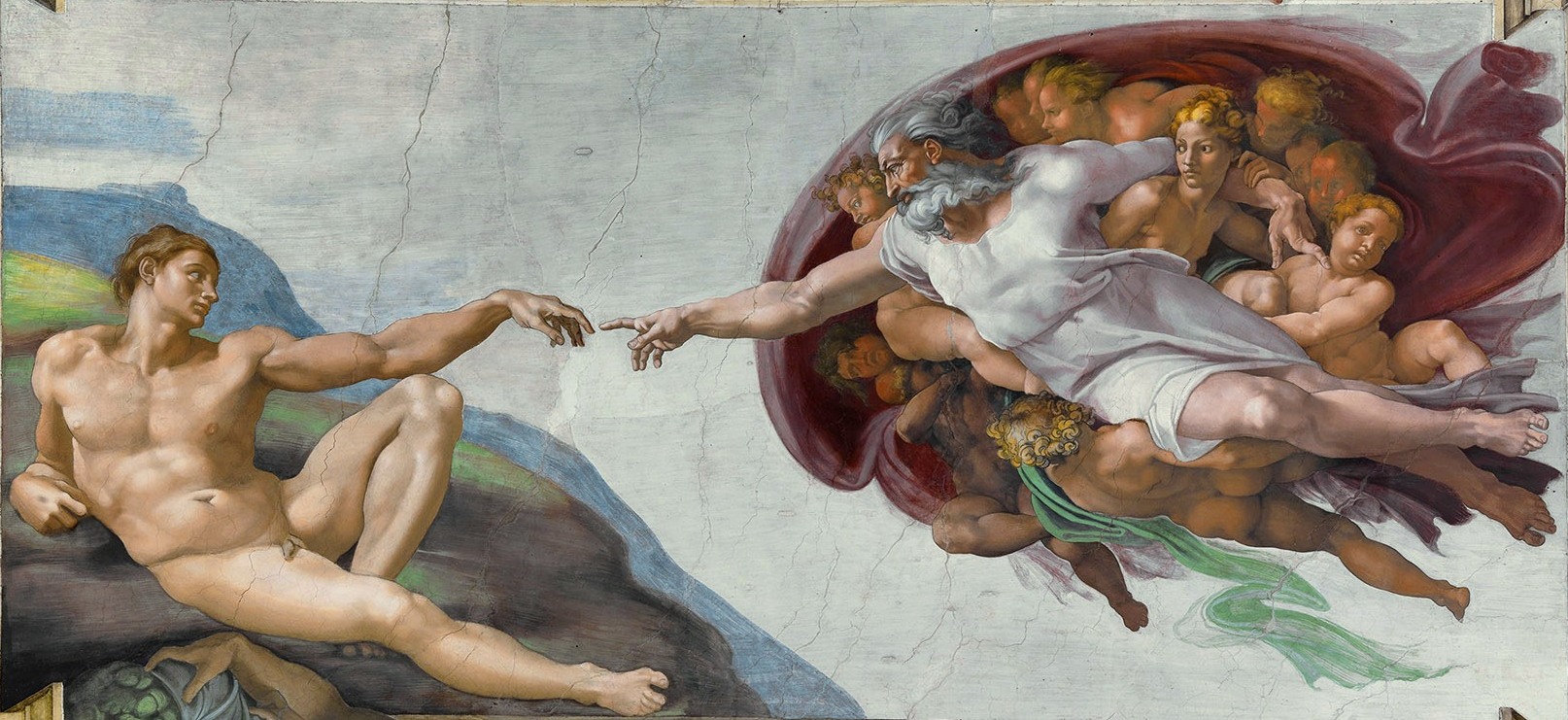
An outstretched hand, an outstretched heart.
Fingertips mere whispers apart.
Insatiable hunger and deepest desire,
Unquenchable thirst, irrepressible fire.
Intrinsically present inside every man,
Creator of sadness, joy, and élan.
Every act, subservient to this grand pursuit,
Each pleasure obtained a poor substitute.
Life is propelled by these two intertwined,
Limitless longing and hope unconfined.
Cornelius Plantinga opens his book Engaging God's World by examining hope and longing. Longing is fundamental to humanity. We all know what it is to long for something, for a time gone by, for a quiet meadow, for peace, for freedom, for love. To be human is to have desires but as Plantinga says those, "longings are unfulfillable. Everything that we truly long for and reach for in this life is something unobtainable. Humanities longing goes beyond this world and as Lewis concluded, "If I find in myself a desire which no experience in this world can satisfy, the most probable explanation is that I was made for another world." Humanities desire in fact says Plantinga is traced back to God. "...human beings want God", he says and he quotes Augustine phrasing it beautifully, "O Lord, you have made us for yourself, and our heart is restless until we rest in you."
This longing is then a key ingredient to hope. To hope for something one also longs for it. Nothing is hoped for that is not longed for, though some things that are longed for are not hoped for because they are discarded as impossible fantasy. Hope is more realistic, it entails a belief that it is possible, as Plantinga says, "Nobody hopes for what he is convinced is a lost cause or logical impossibility." Where does that leave me? What happens then with the longings and hopes? They should lead me God, and make me work for the coming of his kingdom, because we must not be idle. We cannot allow our hopes and longings to be passive moving through life as somnambulists. Instead we must put our hand to the plow and pursue "the deepest and most desperate desire of our hearts" (Harry Potter and the Sorcerers Stone).
Friday, January 7, 2011
Happy is what Happens...
"Because happy is what happens, when all your dreams come true." Wicked
Although this line comes from a comedic and often flippant show, it struck me as a particularly accurate definition of happiness. A feeling based on circumstances, and one that few can obtain, because honestly how many people can claim that all there dreams have come true. When looking at this definition of happiness the idea of a right to it becomes much less convincing. The possibility that everybody is entitled to having their dreams come true is simply absurd because it would be impossible for such a thing to happen because the dreams would always conflict. Multiple people dream of ruling the world, having the same prestigious job, such as president, or of alternate universes with completely different sets of possibilities. The idea is simply ludicrous.
Ultimately I believe that the proponents of the idea of happiness as a right realize that it is in fact an impossibility. They are seeking more for a justification rather than a philosophy. They are reluctant to admit that they have been wrong and so try to say that they had a right to act as they did. In his essay Have no Right to Happiness C.S. Lewis points out that this tactic has primarily been used in regards to sexual infidelity, whether in or out of marriage. People have not yet fallen to the level of claiming that excuse for things such as murder or rape, but their reasoning could be applied to those actions leaving us in a very depraved world indeed. It is however, commonly used as a justification for divorce. Far to often you here a couple citing that they were no longer happy with each other (referring typically to sexually happy) and thus they got a divorce.
Sexual promiscuity has become increasingly acceptable in Western culture. The media bombards us with suggestive images of females in countless advertisements, and movies depict sexual relations outside of marriage increasingly in a positive light and with growing rarity in a negative one. The concept has been taken so far that many teenagers across America think that virgins have something wrong with them, and the term is often born with shame rather than dignity. Instead of conveying self-respect, patience, and virtue, to many virgin has come to convey social awkwardness, prudishness, or unattractiveness. It seems that the concept has advanced even further just as Lewis predicted. "The fatal principle, once allowed in that department, must sooner or later seep through our whole lives." This principle in culture has already seeped into the realm of drug usage and alcoholism. I have heard multiple times that marijuana usage and getting drunk are okay because we have a right to happiness.
This principle is an epidemic that is spreading and needs to be fought. Those that fall to it will come to find that the happiness promised doesn't last or satisfy like they thought it would. They will be left feeling empty. A portion of the song from Wicked, quoted above very poetically describes that disappointment.
Often times we find ourselves pursuing pleasures, trying to make ourselves happy. This is a futile path but we are so easily sucked into it. this is what happens when we substitute happiness for joy. As Lewis says, "Joy, must be sharply distinguished both from Happiness and Pleasure. Joy has indeed one characteristic, and one only, in common with them; the fact that anyone who has experienced it will want it again...I doubt whether anyone who has tasted it would ever, if both were in his power, exchange it for all the pleasures in the world. But Joy is never in our power and pleasure often is." Joy is not circumstantial as both pleasure and happiness are. In fact joy is found in places where one would never find happiness or pleasure. James 1:2 tells us to, "Consider it pure joy, my brother, whenever you face trials of many kinds" and in Hebrews 12:2 we are told to "...fix our eyes upon Jesus... who for the joy set before him endured the cross, scorning its shame." Joy is found in suffering when happiness has fled. We have no right to happiness but we should not even be seeking it in the first place. In seeking happiness we have simply misplaced our longing for joy.
Although this line comes from a comedic and often flippant show, it struck me as a particularly accurate definition of happiness. A feeling based on circumstances, and one that few can obtain, because honestly how many people can claim that all there dreams have come true. When looking at this definition of happiness the idea of a right to it becomes much less convincing. The possibility that everybody is entitled to having their dreams come true is simply absurd because it would be impossible for such a thing to happen because the dreams would always conflict. Multiple people dream of ruling the world, having the same prestigious job, such as president, or of alternate universes with completely different sets of possibilities. The idea is simply ludicrous.
Ultimately I believe that the proponents of the idea of happiness as a right realize that it is in fact an impossibility. They are seeking more for a justification rather than a philosophy. They are reluctant to admit that they have been wrong and so try to say that they had a right to act as they did. In his essay Have no Right to Happiness C.S. Lewis points out that this tactic has primarily been used in regards to sexual infidelity, whether in or out of marriage. People have not yet fallen to the level of claiming that excuse for things such as murder or rape, but their reasoning could be applied to those actions leaving us in a very depraved world indeed. It is however, commonly used as a justification for divorce. Far to often you here a couple citing that they were no longer happy with each other (referring typically to sexually happy) and thus they got a divorce.
Sexual promiscuity has become increasingly acceptable in Western culture. The media bombards us with suggestive images of females in countless advertisements, and movies depict sexual relations outside of marriage increasingly in a positive light and with growing rarity in a negative one. The concept has been taken so far that many teenagers across America think that virgins have something wrong with them, and the term is often born with shame rather than dignity. Instead of conveying self-respect, patience, and virtue, to many virgin has come to convey social awkwardness, prudishness, or unattractiveness. It seems that the concept has advanced even further just as Lewis predicted. "The fatal principle, once allowed in that department, must sooner or later seep through our whole lives." This principle in culture has already seeped into the realm of drug usage and alcoholism. I have heard multiple times that marijuana usage and getting drunk are okay because we have a right to happiness.
This principle is an epidemic that is spreading and needs to be fought. Those that fall to it will come to find that the happiness promised doesn't last or satisfy like they thought it would. They will be left feeling empty. A portion of the song from Wicked, quoted above very poetically describes that disappointment.
No, I couldn't be happier
Though it is, I admit
The tiniest bit
Unlike I anticipated
But I couldn't be happier
Simply couldn't be happier
Well - not "simply":
'Cause getting your dreams
It's strange, but it seems
A little - well - complicated
There's a kind of a sort of : cost
There's a couple of things get: lost
There are bridges you cross
You didn't know you crossed
Until you've crossed
And if that joy, that thrill
Doesn't thrill you like you think it will...
Often times we find ourselves pursuing pleasures, trying to make ourselves happy. This is a futile path but we are so easily sucked into it. this is what happens when we substitute happiness for joy. As Lewis says, "Joy, must be sharply distinguished both from Happiness and Pleasure. Joy has indeed one characteristic, and one only, in common with them; the fact that anyone who has experienced it will want it again...I doubt whether anyone who has tasted it would ever, if both were in his power, exchange it for all the pleasures in the world. But Joy is never in our power and pleasure often is." Joy is not circumstantial as both pleasure and happiness are. In fact joy is found in places where one would never find happiness or pleasure. James 1:2 tells us to, "Consider it pure joy, my brother, whenever you face trials of many kinds" and in Hebrews 12:2 we are told to "...fix our eyes upon Jesus... who for the joy set before him endured the cross, scorning its shame." Joy is found in suffering when happiness has fled. We have no right to happiness but we should not even be seeking it in the first place. In seeking happiness we have simply misplaced our longing for joy.
Thursday, January 6, 2011
Bulverism
"...refutation is no necessary part of argument. Assume your opponent is wrong and then explain his error, and the world will be at your feet. Attempt to prove that he is wrong or (worse still) try to find out whether he is wrong or right, and the national dynamism of our age will thrust you to the wall."
Nothing infuriates me more than a person who argues without reason. Hardened Bulverists are quite possibly the people that I find it hardest to love as Christ commanded us to. To engage in an argument with one is a futile endeavor and it simply leaves one drained and frustrated, for the Bulverist does not hear a single point you have made, or make any attempt to refute them. They argue solely for their chosen purpose, and instead of using logic and reason to defend their position and attempt to dismantle yours they simply launch an attack upon you assuming your argument is false with no other reasoning other than that it is not theirs.
Lewis came up with the term Bulverism upon noticing the predominance of those methods across multiple fields. By those methods Lewis is referring to the practice of "...[assuming] without discussion that he is wrong and then [distracting] his attention from this (the only real issue) by busily explaining how he came to be so silly." Lewis noted that this practice was applied everywhere but particularly in politics. That tradition has most certainly continued as I think back to the midterm elections where the campaign adds were nearly entirely mudslinging cheap shots and the other candidates decrying there foolishness while not so much as touching upon the actual right or wrong of the issues up for debate.
As much as I hate Bulverism, I must confess to being guilty of it on occasion. Those instances came primarily in cases where I had either little knowledge or little respect for the speaker and therefore discounted their ideas because of who said them rather than upon the merit of the ideas. As was noted during the class one of the big issues of Bulverism is that the argument and the debater have not been kept separate. The veracity of a statement is not dependent upon speaker. Even if the speaker is the most heinous criminal, or the most ignorant buffoon, we cannot dismiss what they say simply because it came from his mouth. We must examine the point the make and after judging its merit and reason come to a conclusion whether to accept the statement or not. The devil himself spoke truth upon occasion, thus if we refused to believe everything he said simply because of the fact that he was the devil, we would find our selves believing that Jesus had not the power to turn stones to bread or have his angels catch him should he fall from the temple heights (Matt 4).
In addition to the separation of the speaker and the argument, perhaps the most effective tool to combat Bulverism in oneself is humility. For, "When pride comes, then comes disgrace, but with humility comes wisdom" Prov 11:2 NIV. We must have the humility to recognize that we are not indeed wise, and that there is a possibility that we are wrong. Even if we are correct in our position we must hold onto humility and not feel wounded because someone disagrees but rather seek to help others see the truth of the matter. In an argument we should be trying to convince someone of the truth of the idea not that they are wrong and we are right.
Nothing infuriates me more than a person who argues without reason. Hardened Bulverists are quite possibly the people that I find it hardest to love as Christ commanded us to. To engage in an argument with one is a futile endeavor and it simply leaves one drained and frustrated, for the Bulverist does not hear a single point you have made, or make any attempt to refute them. They argue solely for their chosen purpose, and instead of using logic and reason to defend their position and attempt to dismantle yours they simply launch an attack upon you assuming your argument is false with no other reasoning other than that it is not theirs.
Lewis came up with the term Bulverism upon noticing the predominance of those methods across multiple fields. By those methods Lewis is referring to the practice of "...[assuming] without discussion that he is wrong and then [distracting] his attention from this (the only real issue) by busily explaining how he came to be so silly." Lewis noted that this practice was applied everywhere but particularly in politics. That tradition has most certainly continued as I think back to the midterm elections where the campaign adds were nearly entirely mudslinging cheap shots and the other candidates decrying there foolishness while not so much as touching upon the actual right or wrong of the issues up for debate.
As much as I hate Bulverism, I must confess to being guilty of it on occasion. Those instances came primarily in cases where I had either little knowledge or little respect for the speaker and therefore discounted their ideas because of who said them rather than upon the merit of the ideas. As was noted during the class one of the big issues of Bulverism is that the argument and the debater have not been kept separate. The veracity of a statement is not dependent upon speaker. Even if the speaker is the most heinous criminal, or the most ignorant buffoon, we cannot dismiss what they say simply because it came from his mouth. We must examine the point the make and after judging its merit and reason come to a conclusion whether to accept the statement or not. The devil himself spoke truth upon occasion, thus if we refused to believe everything he said simply because of the fact that he was the devil, we would find our selves believing that Jesus had not the power to turn stones to bread or have his angels catch him should he fall from the temple heights (Matt 4).
In addition to the separation of the speaker and the argument, perhaps the most effective tool to combat Bulverism in oneself is humility. For, "When pride comes, then comes disgrace, but with humility comes wisdom" Prov 11:2 NIV. We must have the humility to recognize that we are not indeed wise, and that there is a possibility that we are wrong. Even if we are correct in our position we must hold onto humility and not feel wounded because someone disagrees but rather seek to help others see the truth of the matter. In an argument we should be trying to convince someone of the truth of the idea not that they are wrong and we are right.
Meditations in a Toolshed
1 Cor 13:11
"When I was a child, I talked like a child, I thought like a child, I reasoned like a child. When I became a man, I put childish ways behind me."
NIV
As children, when we come into the world we tend to look along things. The entire world is a brand new place, we are experiencing it for the first time and we have no reason to suspect that their is any other way to observe our new surroundings. As a child we make sense of the world, the first way that we can, typically through our experiences and what our parents tell us. We look along the things, very much a part of every happening, not removed in anyway. Our childlike faith is an aspect of looking along. That prayer you might have said when you were six years old on your fathers lap, or by your parents bed, where you asked for Jesus to be your savior, that was looking along. It is a faith that is typically wholehearted, and genuine, but it is a faith that is only looking along and is not fully known. That does not mean however, that this type of faith should be discounted. In fact the scriptures say this type of faith is absolutely necessary. 1 Cor 13:11
When I was a child, I talked like a child, I thought like a child, I reasoned like a child. When I became a man, I put childish ways behind me.
Mark 10:15
"I tell you the truth, anyone who will not receive the kingdom of God like a little child will never enter it."
NIV
Lewis points the necessity of looking along, of being on the inside saying, "The very subject for his inquiries from outside exists for him only because he has, at least once, been inside." In order to examine something and look at it, we first must have looked along it. That is to say looking along the item does provide truth about it. Not the entire truth, but truth that won't be found by simply looking at.
As Paul says however, "When I became a man, I put childish ways behind me." As we leave childhood and begin to examine the world around us again, and more importantly examine our beliefs about that world, we begin to look at everything, rather than simply looking along it. "Why?" is the the great question that drives us to look at everything. No longer are we content to simply accept the world and everything in it for what it is at face value, we desire a deeper understanding of what things are, how they work, and above all why they do. At some point we come to our beliefs and begin taking a step back, removing ourselves from it, in order to look at it. We begin to piece together things in our faith that don't make sense from this angle, where as before they were indubitable. Our faith grows, it shifts to a rational, grounded faith, one that is based upon a more complete knowledge of the nature of the world. At least the hope is that it grows. It is also possible that one might abandon it entirely, having not found enough reason to satisfy there belief and falling into the trap of discounting entirely the view from the inside. While I firmly believe that one can, looking from the outside, ascertain the possibility of the truth of Christianity, at the same time it is not difficult to discount it entirely as merely a psychological phenomenon created by the human brain. It is once this point is reached that one has taken up the idea that "looking at is , by its own nature, intrinsically better than looking along." (Lewis) This is the tragedy of much of the world. To often we fail to consider the view along, taking only the view of the issue as true. However, just as the view along gave only a partial picture, so too the view at gives only a partial picture.
Adult disbelief and childlike faith are thus shown to be essentially two sides of the coin. Each only accepts the one way of looking, discounting the other as a valid method in any and every situation. That is not to say that each method is entirely valid in every situation. Lewis points out that "the savage's dance to Nyonga does not really cause the crops to grow." He has been deceived by looking along, and has not taken the time to look at in order to realize that his dance is futile. The man who always looks at however, is never able to experience anything, and indeed it is entirely impossible to never look along something, as Lewis says, "you can step outside one experience only by stepping into another." Thus the man who says he only looks at things is also deceived because he has simply chosen a different beam to look along. To find the truth of the idea, both sides are needed, looking at and along. One can look at in order to determine somethings possibility, feasibility, and rational truth. By looking along one can immerse oneself in the experience and discover what it feels like, and how it shapes things around it. Our Christianity should not be simply one or the other. If our Christianity only looks along then, our faith will be sorely tested and probably fall when it is challenged, because we have no reason other than experience and feelings to hold it forth as true. If we only however, look at then we have reason to believe but we are missing the true belief, the experience of a loving and full relationship with God.
"When I was a child, I talked like a child, I thought like a child, I reasoned like a child. When I became a man, I put childish ways behind me."
NIV
As children, when we come into the world we tend to look along things. The entire world is a brand new place, we are experiencing it for the first time and we have no reason to suspect that their is any other way to observe our new surroundings. As a child we make sense of the world, the first way that we can, typically through our experiences and what our parents tell us. We look along the things, very much a part of every happening, not removed in anyway. Our childlike faith is an aspect of looking along. That prayer you might have said when you were six years old on your fathers lap, or by your parents bed, where you asked for Jesus to be your savior, that was looking along. It is a faith that is typically wholehearted, and genuine, but it is a faith that is only looking along and is not fully known. That does not mean however, that this type of faith should be discounted. In fact the scriptures say this type of faith is absolutely necessary. 1 Cor 13:11
When I was a child, I talked like a child, I thought like a child, I reasoned like a child. When I became a man, I put childish ways behind me.
Mark 10:15
"I tell you the truth, anyone who will not receive the kingdom of God like a little child will never enter it."
NIV
Lewis points the necessity of looking along, of being on the inside saying, "The very subject for his inquiries from outside exists for him only because he has, at least once, been inside." In order to examine something and look at it, we first must have looked along it. That is to say looking along the item does provide truth about it. Not the entire truth, but truth that won't be found by simply looking at.
As Paul says however, "When I became a man, I put childish ways behind me." As we leave childhood and begin to examine the world around us again, and more importantly examine our beliefs about that world, we begin to look at everything, rather than simply looking along it. "Why?" is the the great question that drives us to look at everything. No longer are we content to simply accept the world and everything in it for what it is at face value, we desire a deeper understanding of what things are, how they work, and above all why they do. At some point we come to our beliefs and begin taking a step back, removing ourselves from it, in order to look at it. We begin to piece together things in our faith that don't make sense from this angle, where as before they were indubitable. Our faith grows, it shifts to a rational, grounded faith, one that is based upon a more complete knowledge of the nature of the world. At least the hope is that it grows. It is also possible that one might abandon it entirely, having not found enough reason to satisfy there belief and falling into the trap of discounting entirely the view from the inside. While I firmly believe that one can, looking from the outside, ascertain the possibility of the truth of Christianity, at the same time it is not difficult to discount it entirely as merely a psychological phenomenon created by the human brain. It is once this point is reached that one has taken up the idea that "looking at is , by its own nature, intrinsically better than looking along." (Lewis) This is the tragedy of much of the world. To often we fail to consider the view along, taking only the view of the issue as true. However, just as the view along gave only a partial picture, so too the view at gives only a partial picture.
Adult disbelief and childlike faith are thus shown to be essentially two sides of the coin. Each only accepts the one way of looking, discounting the other as a valid method in any and every situation. That is not to say that each method is entirely valid in every situation. Lewis points out that "the savage's dance to Nyonga does not really cause the crops to grow." He has been deceived by looking along, and has not taken the time to look at in order to realize that his dance is futile. The man who always looks at however, is never able to experience anything, and indeed it is entirely impossible to never look along something, as Lewis says, "you can step outside one experience only by stepping into another." Thus the man who says he only looks at things is also deceived because he has simply chosen a different beam to look along. To find the truth of the idea, both sides are needed, looking at and along. One can look at in order to determine somethings possibility, feasibility, and rational truth. By looking along one can immerse oneself in the experience and discover what it feels like, and how it shapes things around it. Our Christianity should not be simply one or the other. If our Christianity only looks along then, our faith will be sorely tested and probably fall when it is challenged, because we have no reason other than experience and feelings to hold it forth as true. If we only however, look at then we have reason to believe but we are missing the true belief, the experience of a loving and full relationship with God.
Subscribe to:
Posts (Atom)