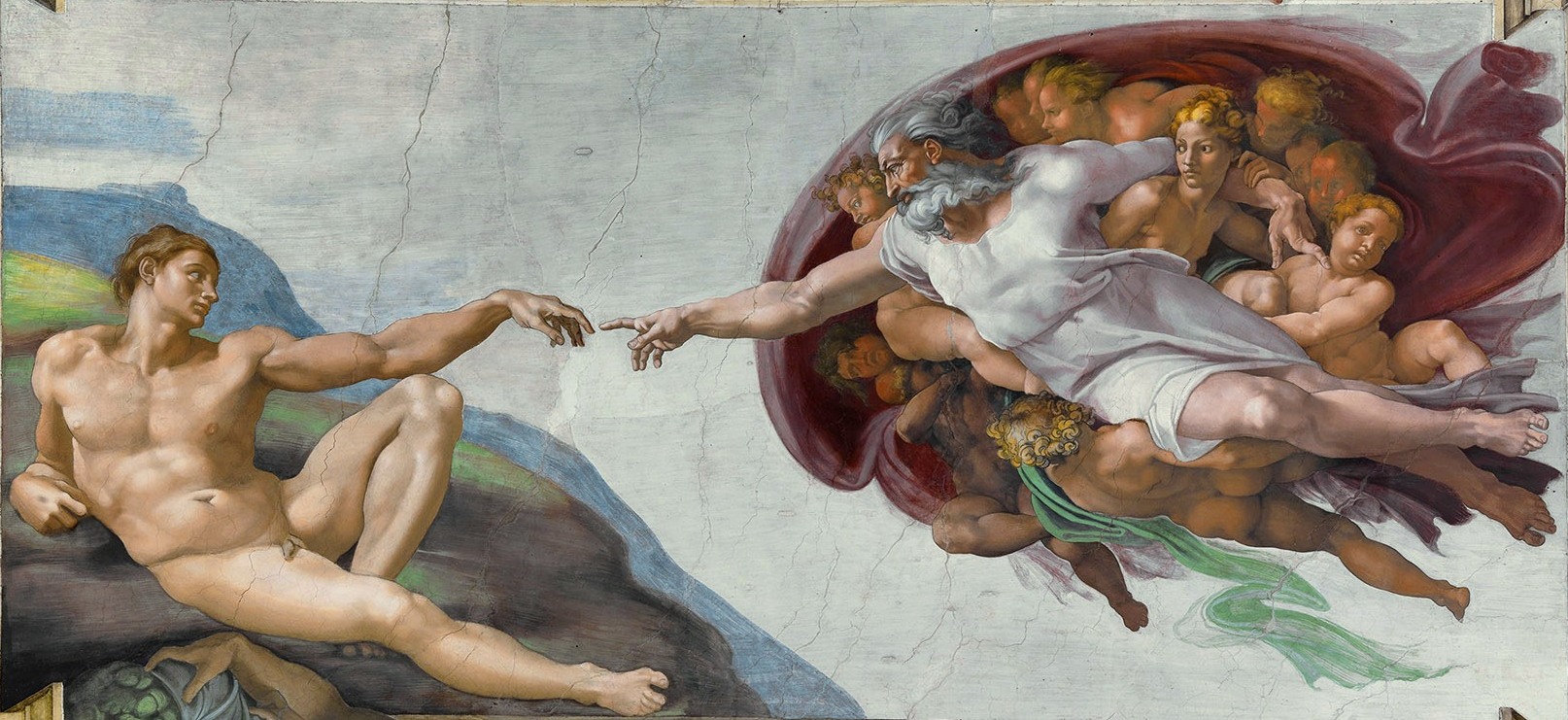
An outstretched hand, an outstretched heart.
Fingertips mere whispers apart.
Insatiable hunger and deepest desire,
Unquenchable thirst, irrepressible fire.
Intrinsically present inside every man,
Creator of sadness, joy, and élan.
Every act, subservient to this grand pursuit,
Each pleasure obtained a poor substitute.
Life is propelled by these two intertwined,
Limitless longing and hope unconfined.
Cornelius Plantinga opens his book Engaging God's World by examining hope and longing. Longing is fundamental to humanity. We all know what it is to long for something, for a time gone by, for a quiet meadow, for peace, for freedom, for love. To be human is to have desires but as Plantinga says those, "longings are unfulfillable. Everything that we truly long for and reach for in this life is something unobtainable. Humanities longing goes beyond this world and as Lewis concluded, "If I find in myself a desire which no experience in this world can satisfy, the most probable explanation is that I was made for another world." Humanities desire in fact says Plantinga is traced back to God. "...human beings want God", he says and he quotes Augustine phrasing it beautifully, "O Lord, you have made us for yourself, and our heart is restless until we rest in you."
This longing is then a key ingredient to hope. To hope for something one also longs for it. Nothing is hoped for that is not longed for, though some things that are longed for are not hoped for because they are discarded as impossible fantasy. Hope is more realistic, it entails a belief that it is possible, as Plantinga says, "Nobody hopes for what he is convinced is a lost cause or logical impossibility." Where does that leave me? What happens then with the longings and hopes? They should lead me God, and make me work for the coming of his kingdom, because we must not be idle. We cannot allow our hopes and longings to be passive moving through life as somnambulists. Instead we must put our hand to the plow and pursue "the deepest and most desperate desire of our hearts" (Harry Potter and the Sorcerers Stone).

Love the Harry Potter reference :) I think that the action part of the hope is what usually gets lost. We truly do have to go after the desires of our heart when it comes to the Kingdom of God. The church is a body of many different people all with different passions. If we each, individually, fully act out on our personal passions, we would be that much closer to God.
ReplyDeleteFirst off, I love your integration of pop culture with all these C.S. Lewis and DCM discussions.
ReplyDeleteThe thing that really struck me here was "hope is more realistic." Maybe this is why hope is more bound up in our actions. Since hope lies in this that could be real, that means there's something we can DO about them (by God's grace).
Therefore, Shalom is not just a passive longing, but a hope and thus something we should be working, doing, striving towards.
I really liked your distinction between hope and longing "...though some things that are longed for are not hoped for because they are discarded as impossible fantasy. Hope is more realistic, it entails a belief that it is possible". In my own life sometimes I confuse my longings with hopes. I am still working through things like that. Your comment was a good reminder for me, thanks!
ReplyDeleteI think you're right about what you said about longing and hope. Thankfully, although we have a longing for God's kingdom, it's not an impossible fantasy; rather, it's one of the truest things we can know. Therefore, we are able to have hope for God's kingdom to come here on earth and can work happily and willingly for Him.
ReplyDelete